


Having gorged ourselves on bike tech and pintxos at the Grand Depart of the 2023 Tour de France, the BikeRadar team is now back home and digesting everything we learned.
As always, there was lots to see, and the archetypal Tour de France bike has evolved significantly since last year’s start in Copenhagen, Denmark.
From lightweight, aero all-rounder bikes and 1x drivetrains, to supersized tyres and ultra-expensive parts, this year’s Tour certainly has its own special flavour.
With that in mind, let’s dive into six of the key tech trends dominating the peloton at the sport’s biggest race.

1x is back

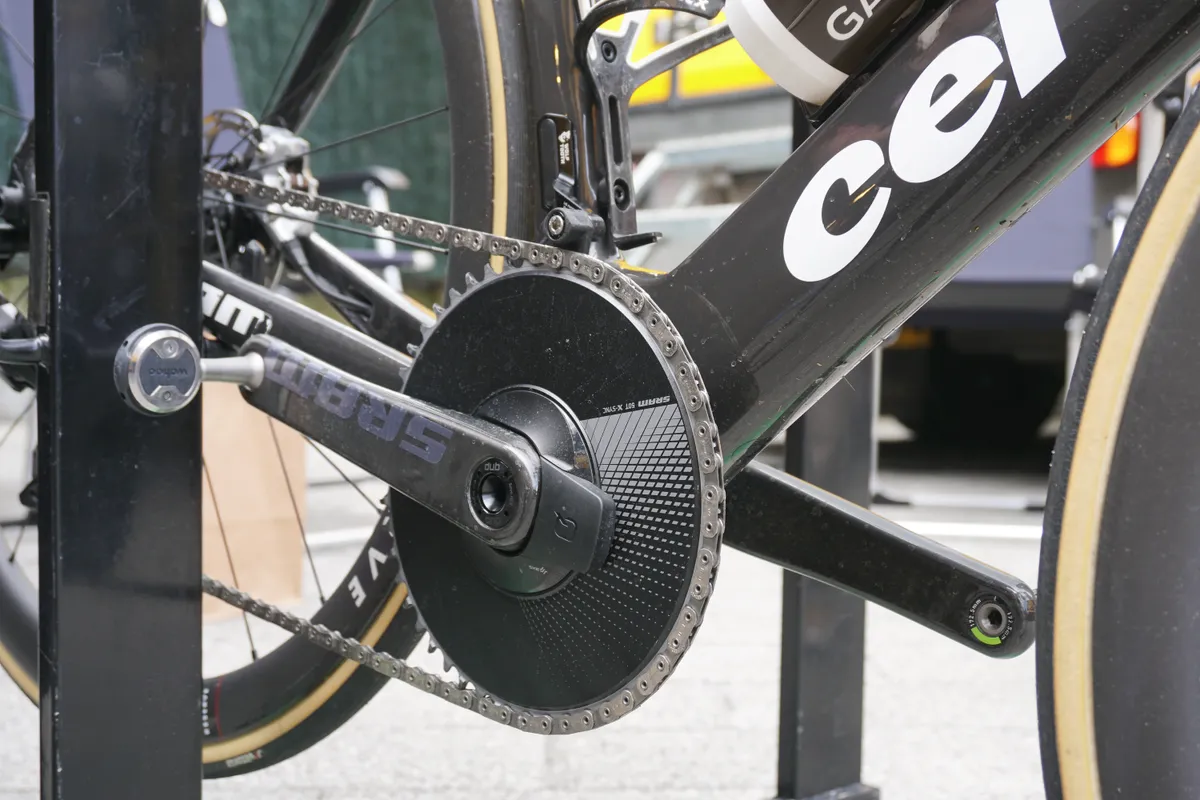
After a stunted start to life in the pro peloton, 1x drivetrains for road bikes are back in the conversation.
At the time of writing, we’ve seen two riders using 1x SRAM Red eTap AXS drivetrains so far at this year’s Tour.
Do two riders make a trend, though? Well, they do when it’s last year’s yellow and green jersey winners, Jonas Vingegaard and Wout Van Aert.

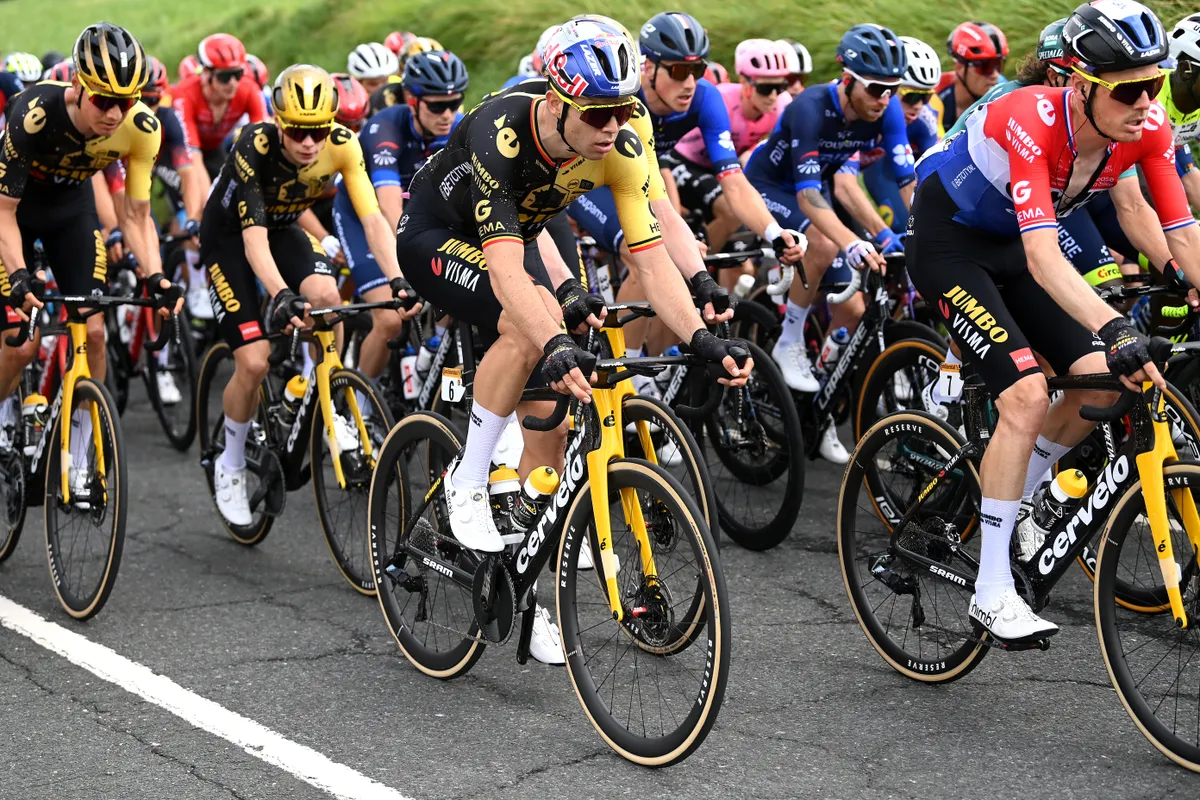
As for why these two are choosing to run 1x instead of 2x, it’s hard to say.
On the right parcours (Van Aert used a 1x drivetrain for this year’s Milan-San Remo, for example), it’s possible to eke out a few marginal gains with a 1x setup, such as an improved chainline, marginally reduced aerodynamic drag and, of course, a simpler shifting setup with less risk of chain drops.
On the other hand, with only one chainring available, riders must choose between having lots of gear range but larger jumps between the gears, or less overall range and a tighter cassette, so there are compromises to it as well.
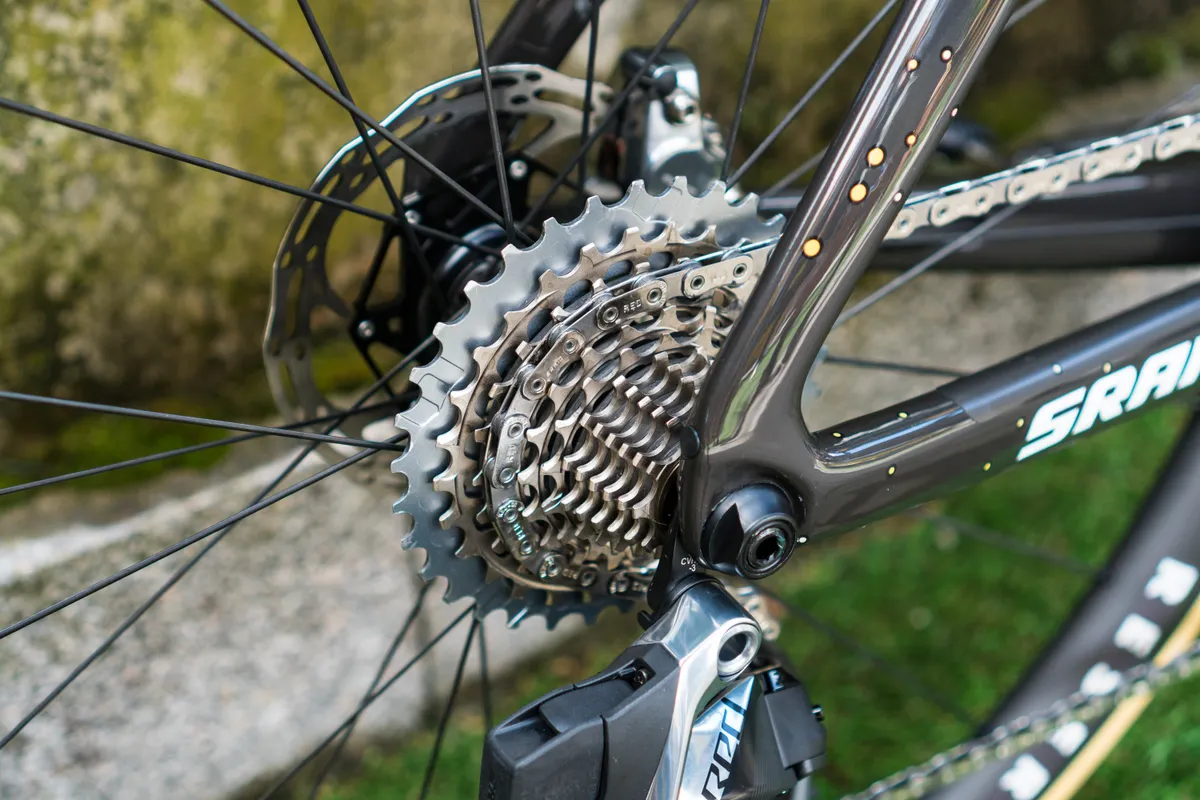
Could it be pressure from the team performance directors or sponsors? SRAM has, after all, pushed 1x for road and gravel much more than Shimano, who sponsor the majority of teams in the peloton.
We don’t know, of course, though we are sure neither Vingegaard or Van Aert would run it on their bikes if they thought it was a significant disadvantage.
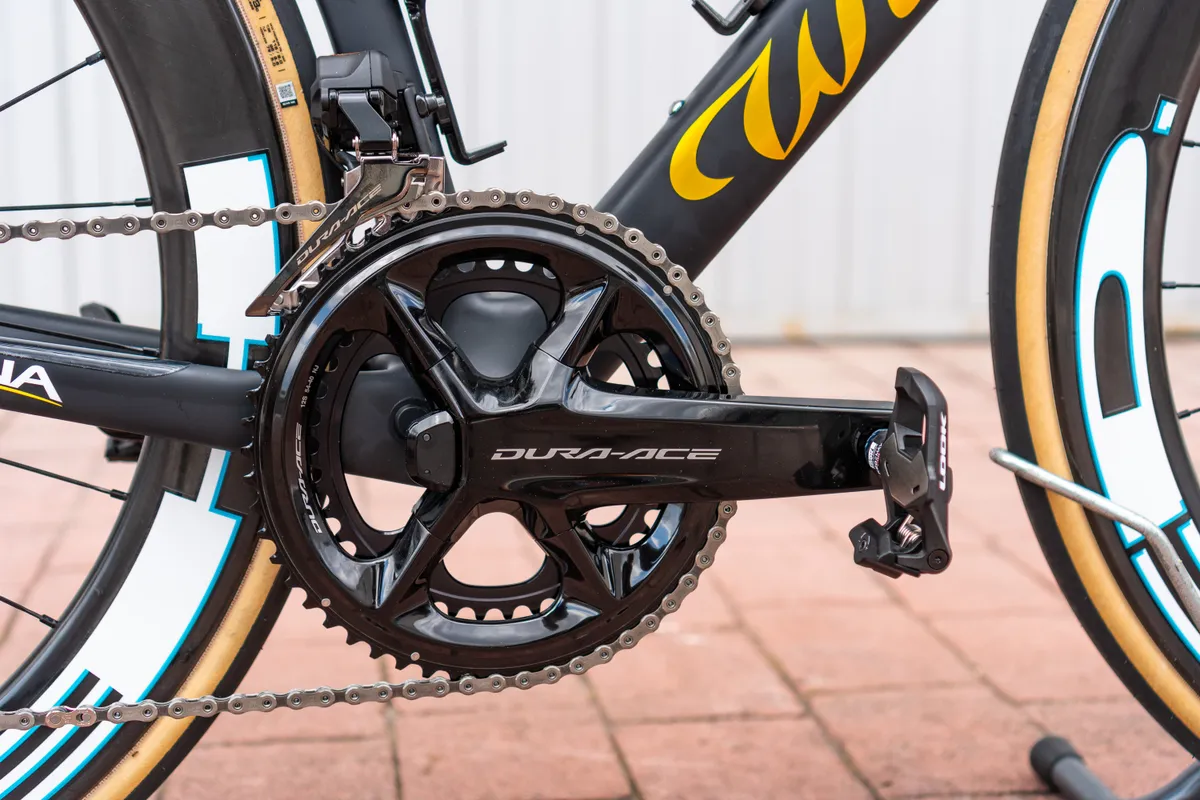
Like the changes from rim to disc brakes, tubular to tubeless tyres and lightweight to aero road bikes in recent years, pro riders can sometimes be cautious about tech innovations, so we don’t expect the rest of the peloton to be jumping ship to 1x anytime soon.
We can still be sure other riders and teams will be paying attention, though, and if Jumbo-Visma does have success on 1x then we may see more of it at the Tour going forward.
Divergent tyre choices
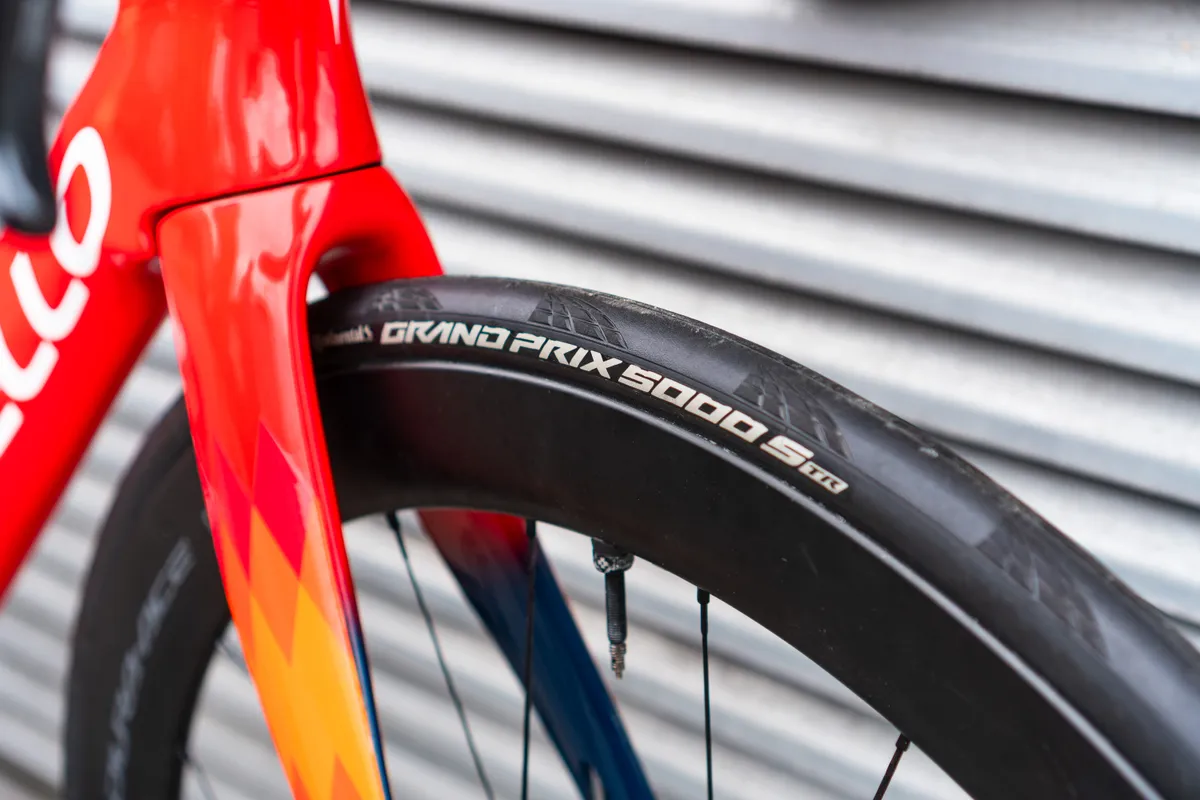
Just when we thought things were calming down in terms of tyre choices, we actually saw a wide variety of types and widths at this year’s Tour.
As has been happening for a number of years, we’re seeing an ever-increasing amount of tubeless wheels and tyres and far fewer tubular options.
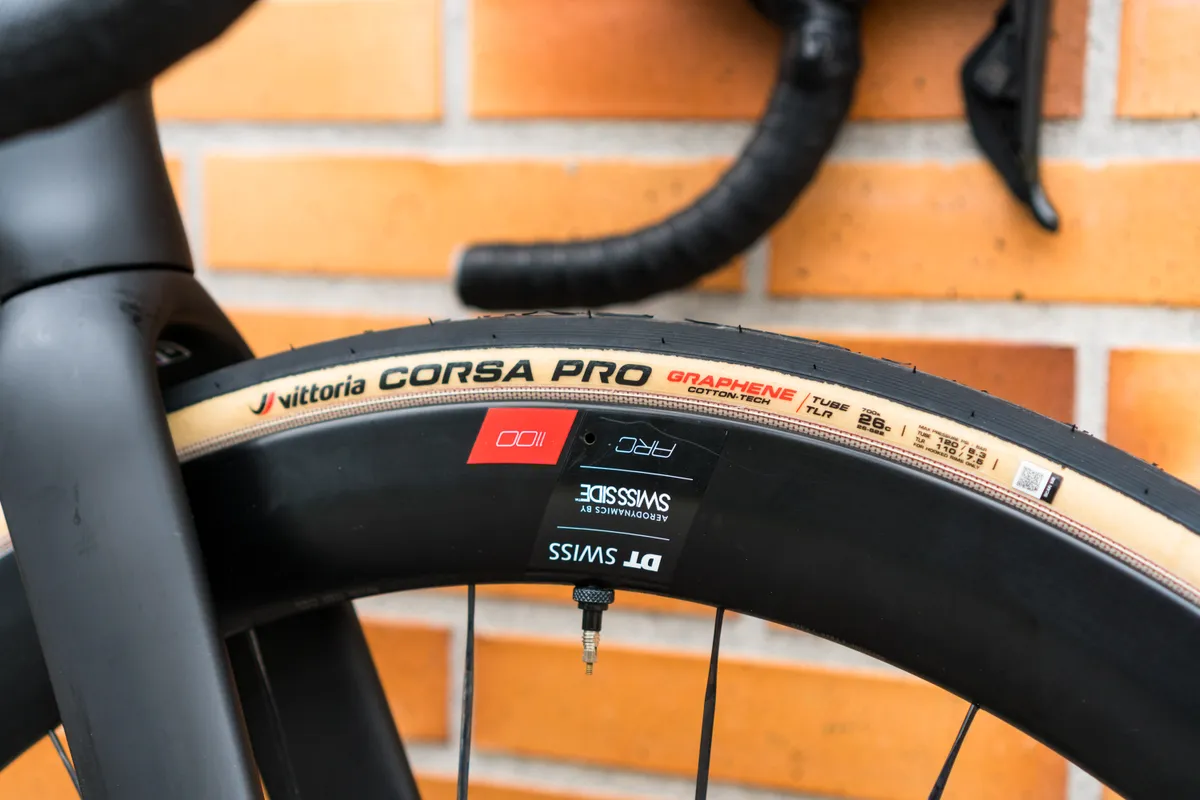
Interestingly, though, it appears teams haven’t simply settled on 28c tubeless tyres across the board.
Instead, each team appears to have optimised its tyre setup for the specific bike and wheel combinations it uses.
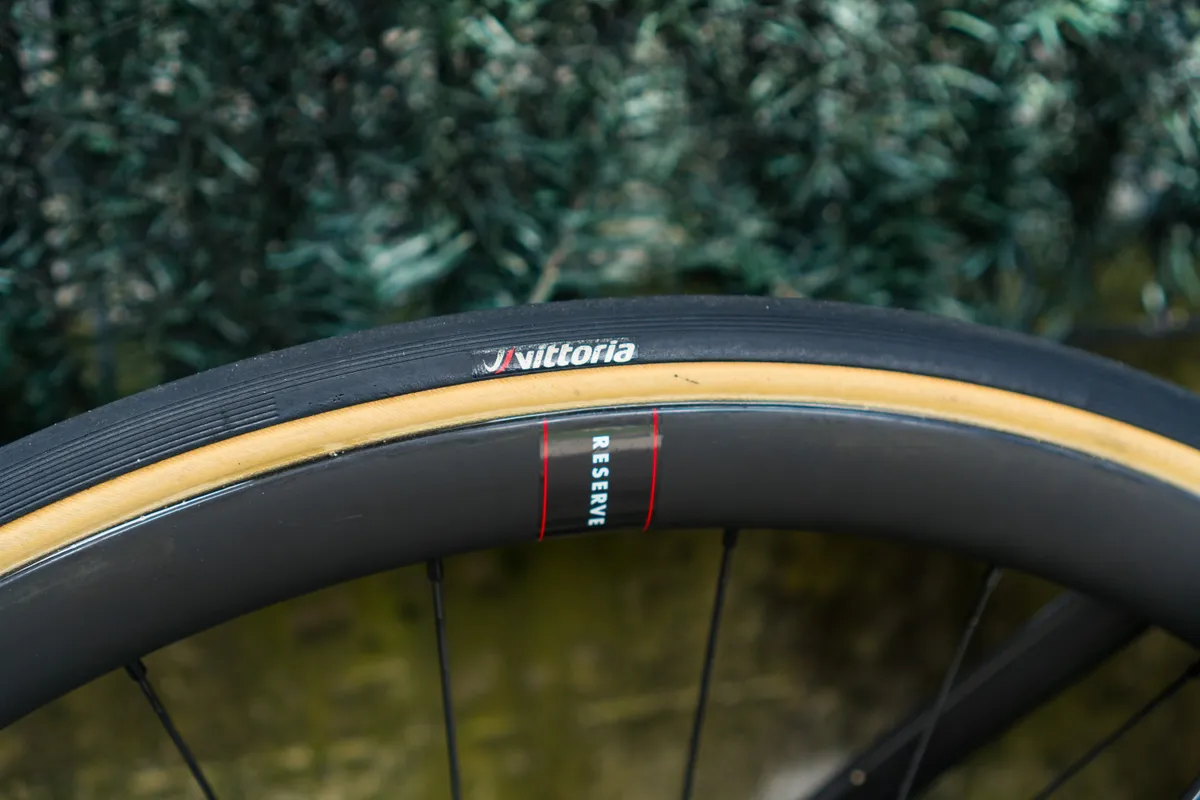
For example, when we saw Jonas Vingegaard’s Cervélo S5 at the Jumbo-Visma team hotel, it was equipped with 24mm-wide Vittoria Corsa Pro tubular tyres.
That’s quite narrow by modern standards, but given they were mounted to a set of Reserve 34|37 wheels, I suspect this was a lightweight combination intended to help get his bike weight down as much as possible for the lumpy opening stages.
We wouldn’t be surprised if Jonas switched this wheelset for something more aero, perhaps with tubeless tyres, for the flatter or more rolling stages of this year’s Tour.
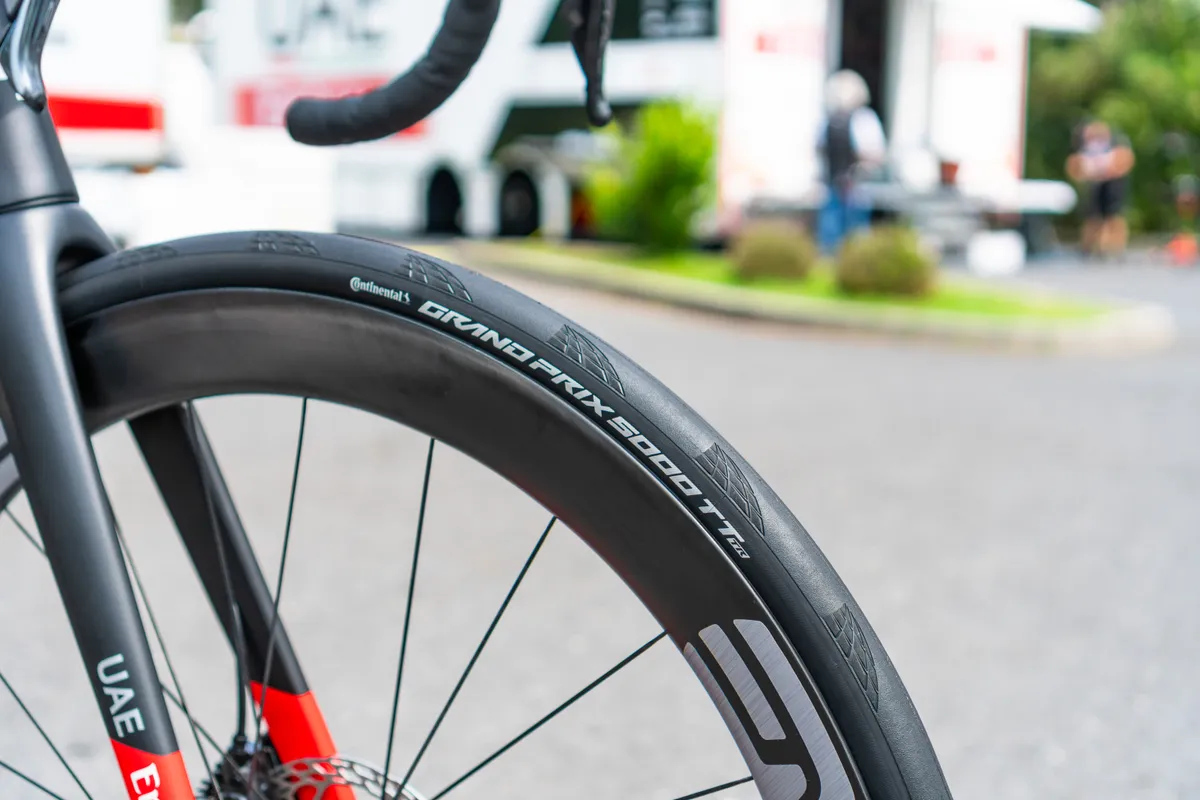
Over at the UAE Team Emirates hotel, Tadej Pogačar’s bike had Continental GP5000 TT TR tubeless tyres mounted on ENVE SES 4.5 wheels.
These were nominally a size 28c, but on the ENVE rims – which have a super wide, 25mm internal rim width – these tyres were actually measuring up at a whopping 31.3mm at the front and 32.2mm at the rear.
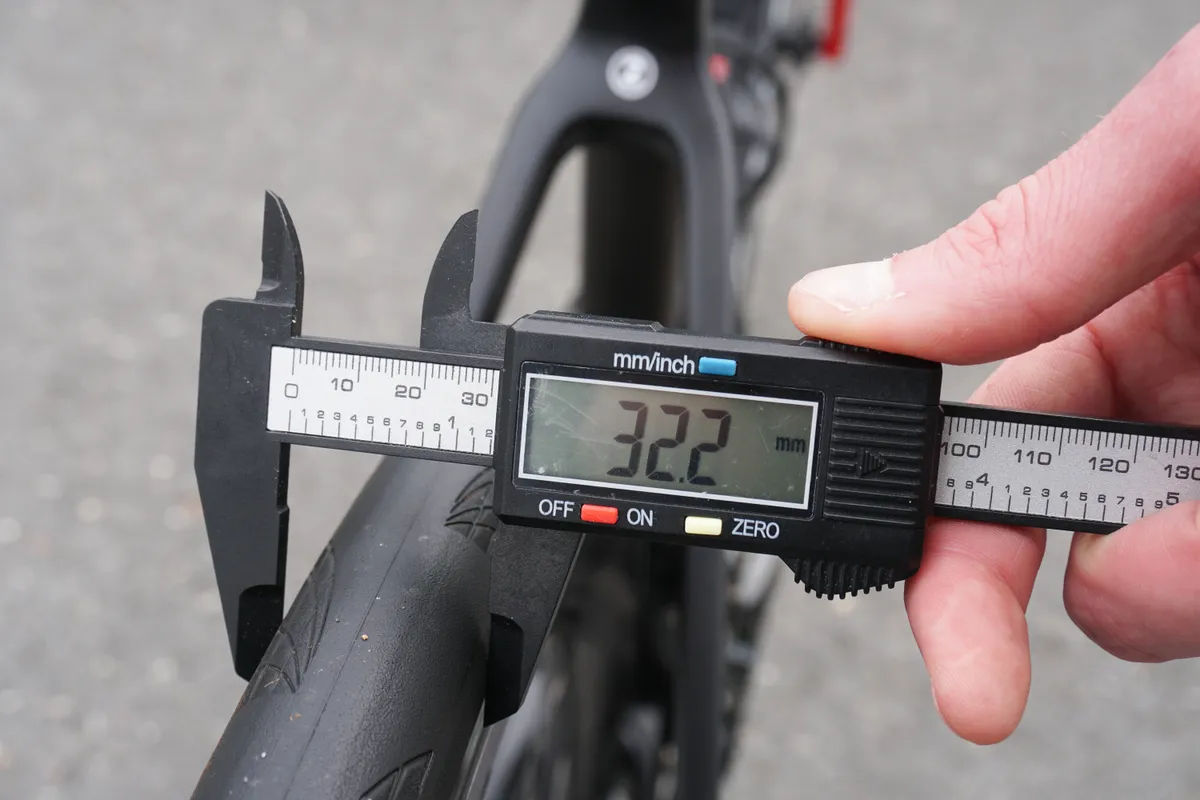
As with Jumbo-Visma, we don’t know if this is what Pogačar will run for every stage. He might switch over to narrower, lighter wheels and tyres for the mountain stages, for example.
But it’s pretty wild to see tyres this wide being used for standard road stages at the Tour de France, and we suspect other teams will again be paying close attention to how they get on.
One bike to rule them all?
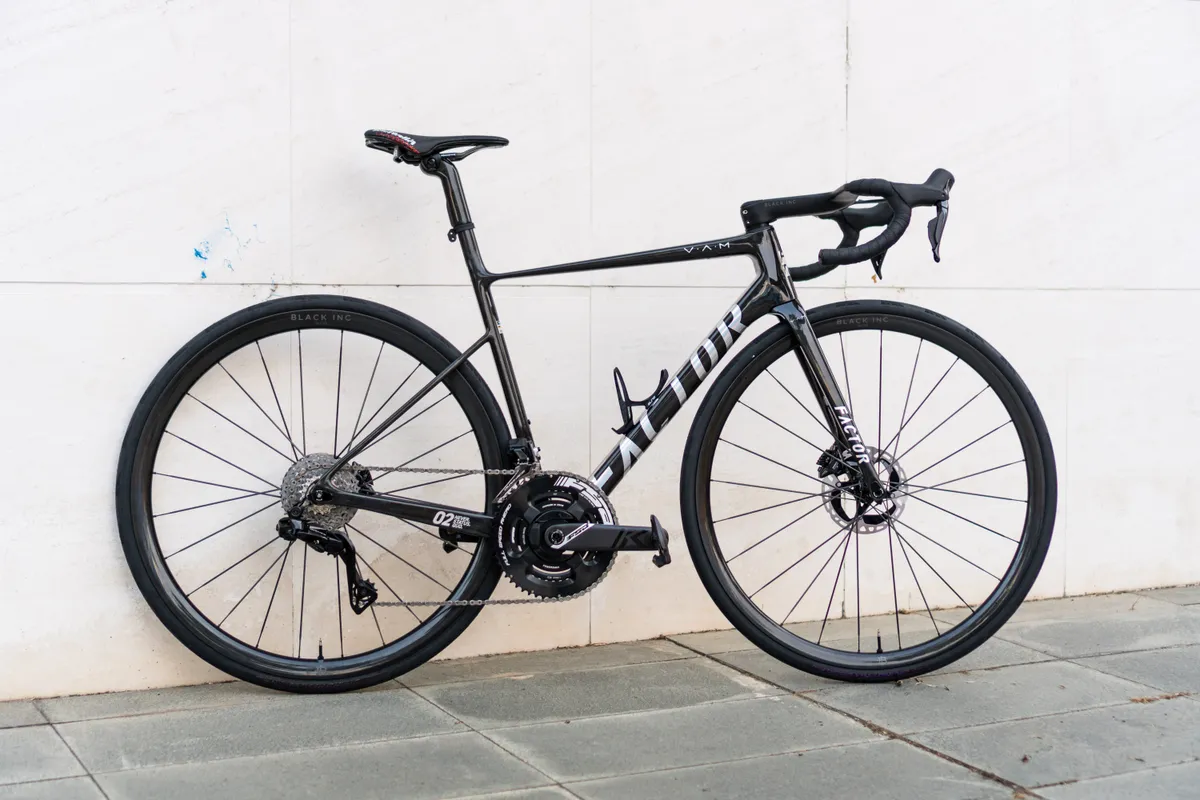
While we saw a smorgasbord of heavyweight aero road bikes at last year’s Grand Depart, this year it was all about the lightweight-aero all-rounders.
Of course, that’s perhaps unsurprising given this year’s opening stages around Bilbao, Spain, were significantly hillier than those around Copenhagen, Denmark, where last year’s race started.
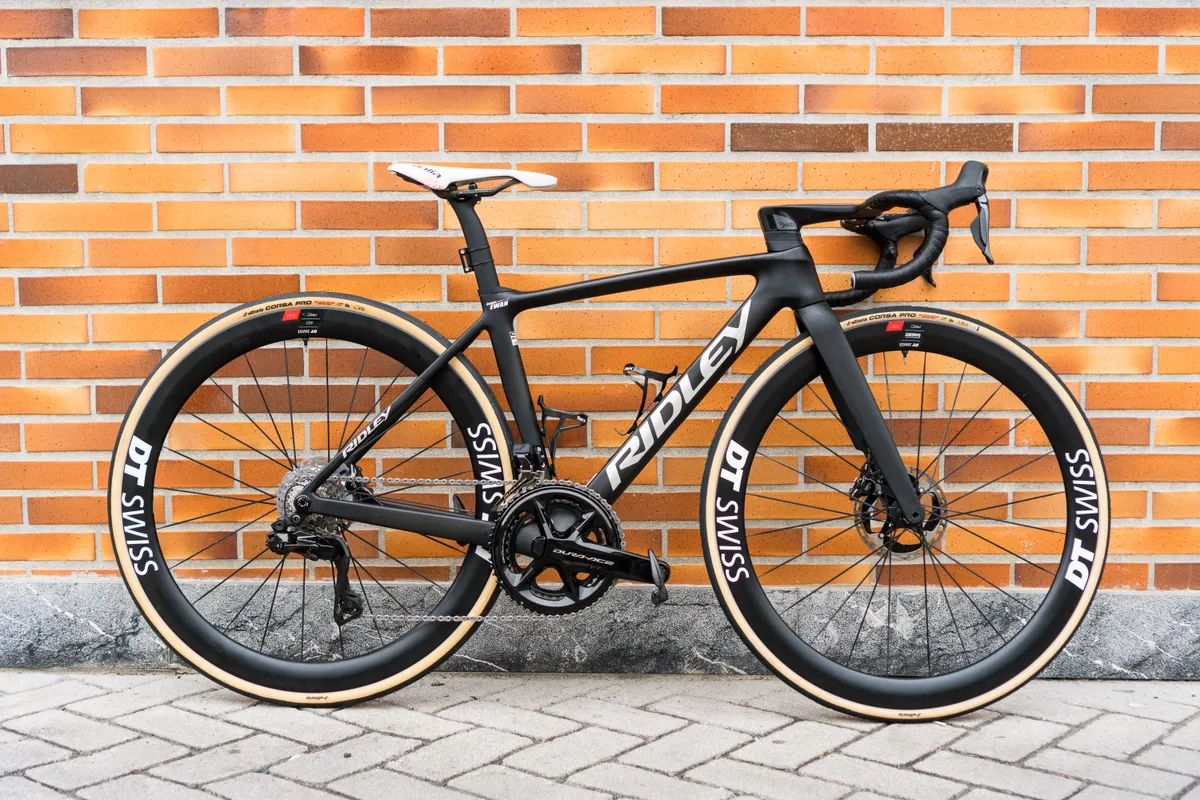
The influx of a number of new bikes in this niche, such as the new Factor O2 VAM, a new prototype Ridley and the Look 795 Blade RS shows that many riders at the pointy end of the sport are still chasing those last few hundreds of grams.
Of course, we also know – thanks to the frequent comments we receive on the topic – that many outside of the pro peloton care a lot about bike weight too.
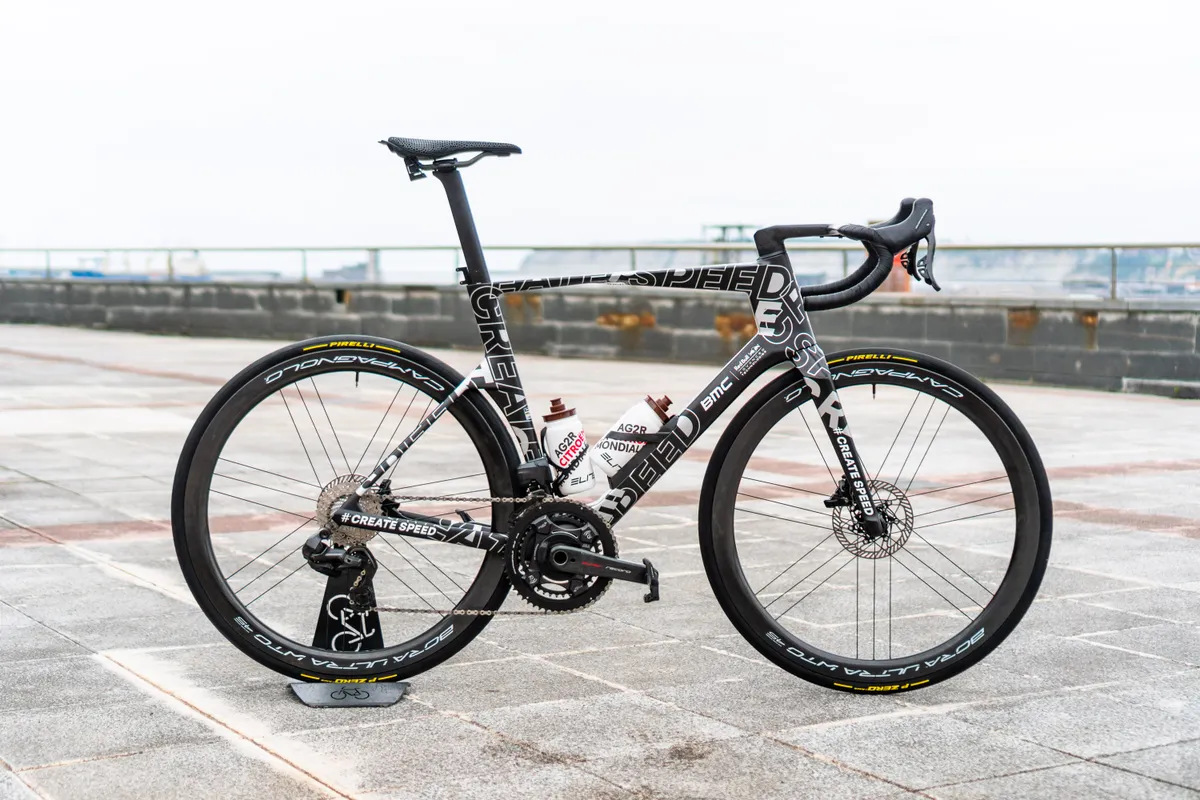
Is this just bike brands waking up to consumer demand then? Possibly – bike brands do exist to sell bikes, after all.
We might also wonder if many brands are looking at the popularity and success of bikes such as the Specialized S-Works Tarmac SL7 – arguably the archetypal lightweight-aero all-rounder road bike from the last few years – and thinking they’d like some of that success for themselves.
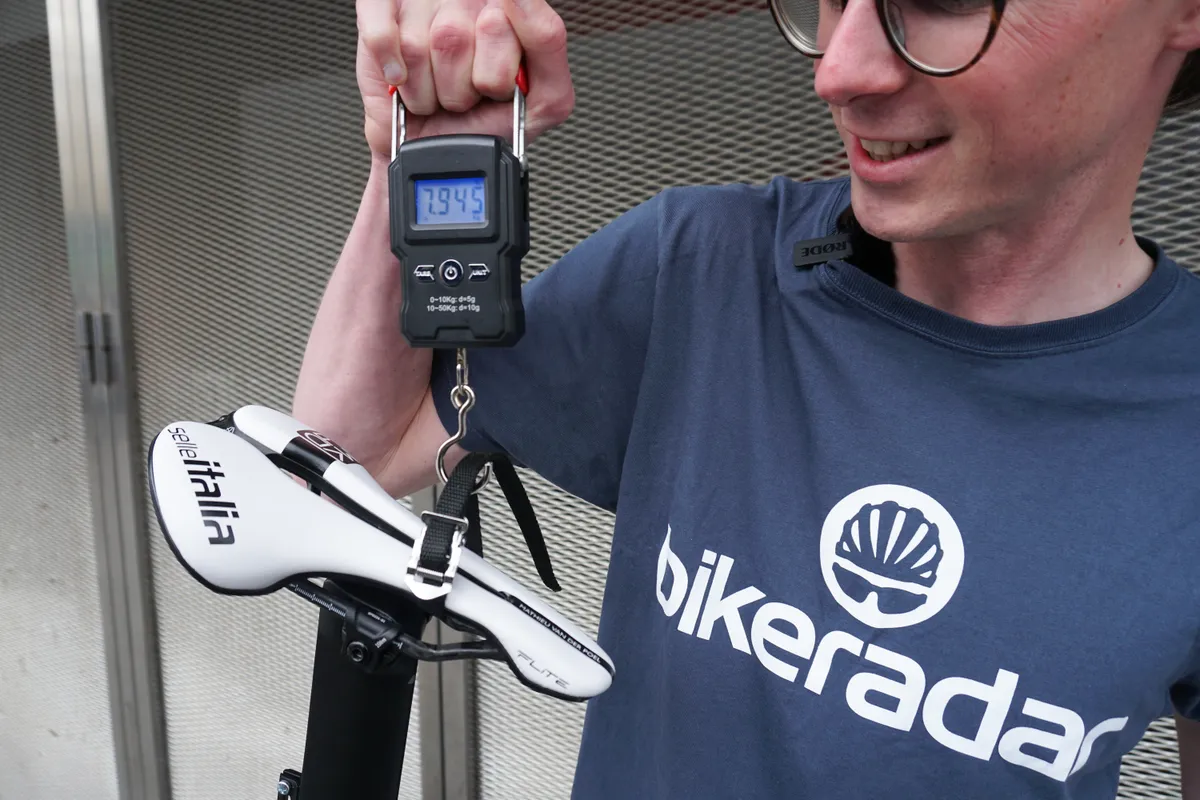
In terms of how much bikes actually weighed at this year’s Tour, we saw a real range – from just over 6.9kg for Simon Clarke’s new Factor O2 VAM, all the way up to 7.945kg for Mathieu van der Poel’s Canyon Aeroad CFR.
Interestingly, looks were fairly deceiving in this department.
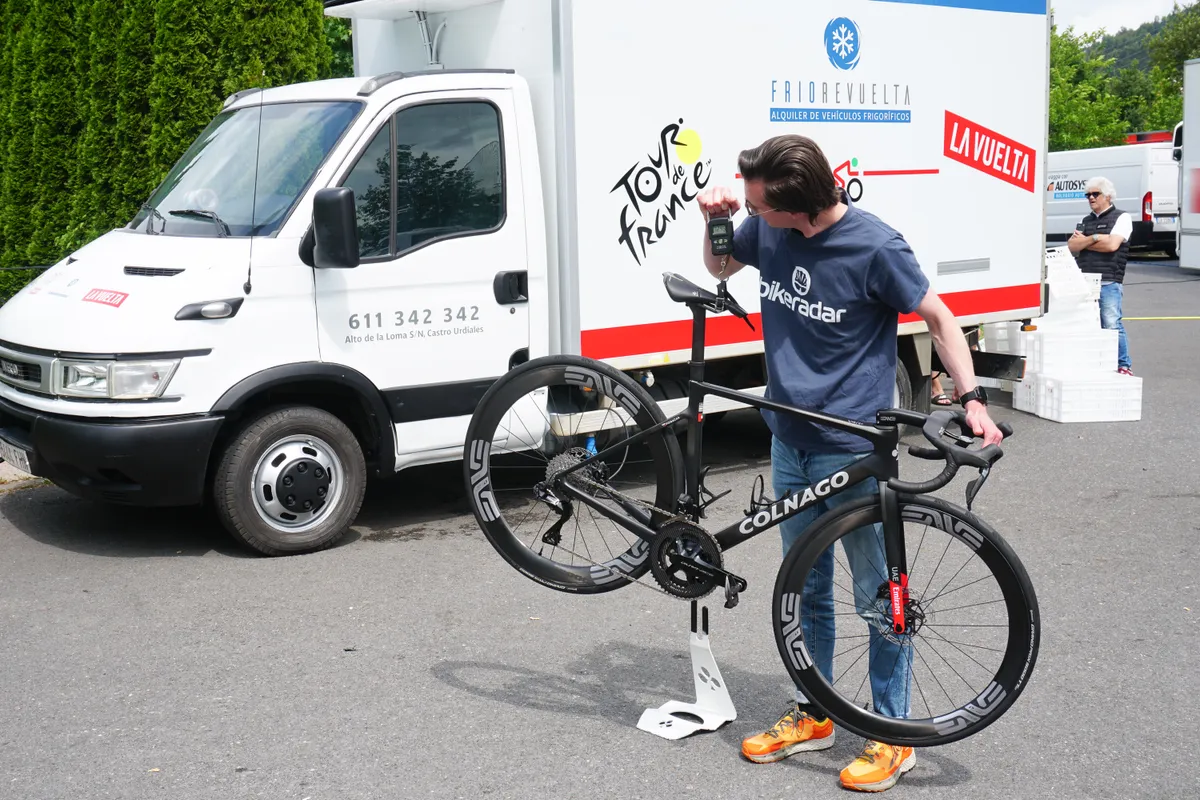
Despite Pogačar’s Colnago V4Rs being adorned with an array of super expensive, weight weenie parts, including carbon chainrings and those TT tyres, it was – at 7.245kg – only 100 grams lighter than Ben O’Connor’s new prototype BMC aero road bike (which weighed 7.345kg, according to our scales).
If you want to see how much every bike we saw at this year’s Tour weighed, though, check out our videos from this year’s Grand Depart on our YouTube channel.
Time trial tech for road stages
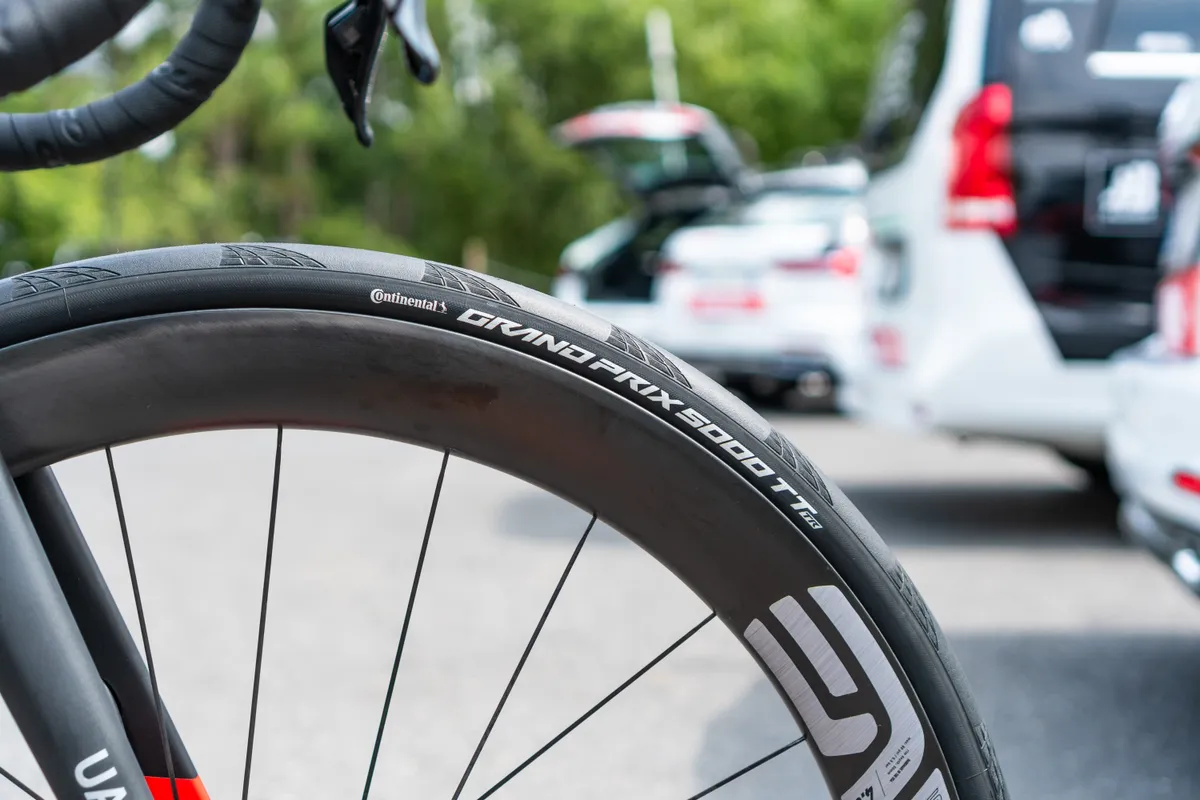
Time trials typically see riders go all-in on speed, eschewing any worries about comfort and durability.
Increasingly, though, we’re seeing time trial-specific kit being used in road stages of the Tour de France too.
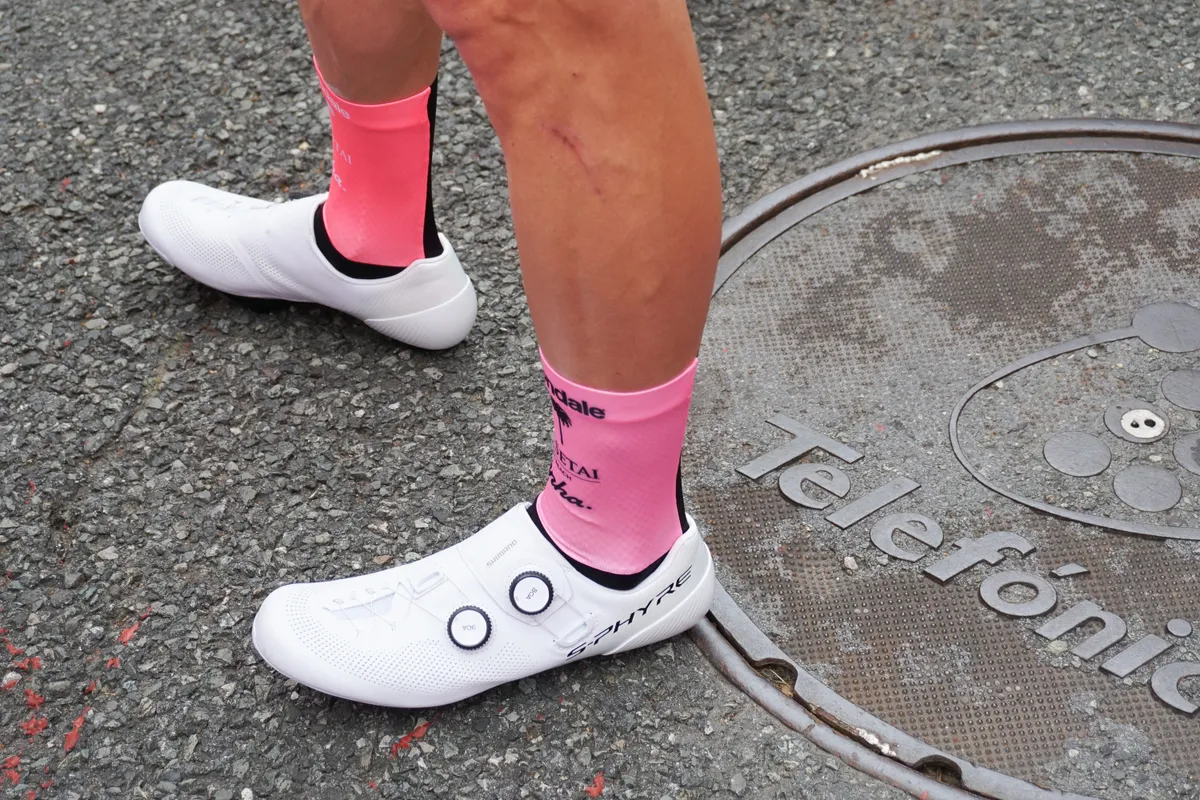
Aero helmets, skinsuits and aero socks, for example, are now almost ubiquitous throughout the Tour peloton.
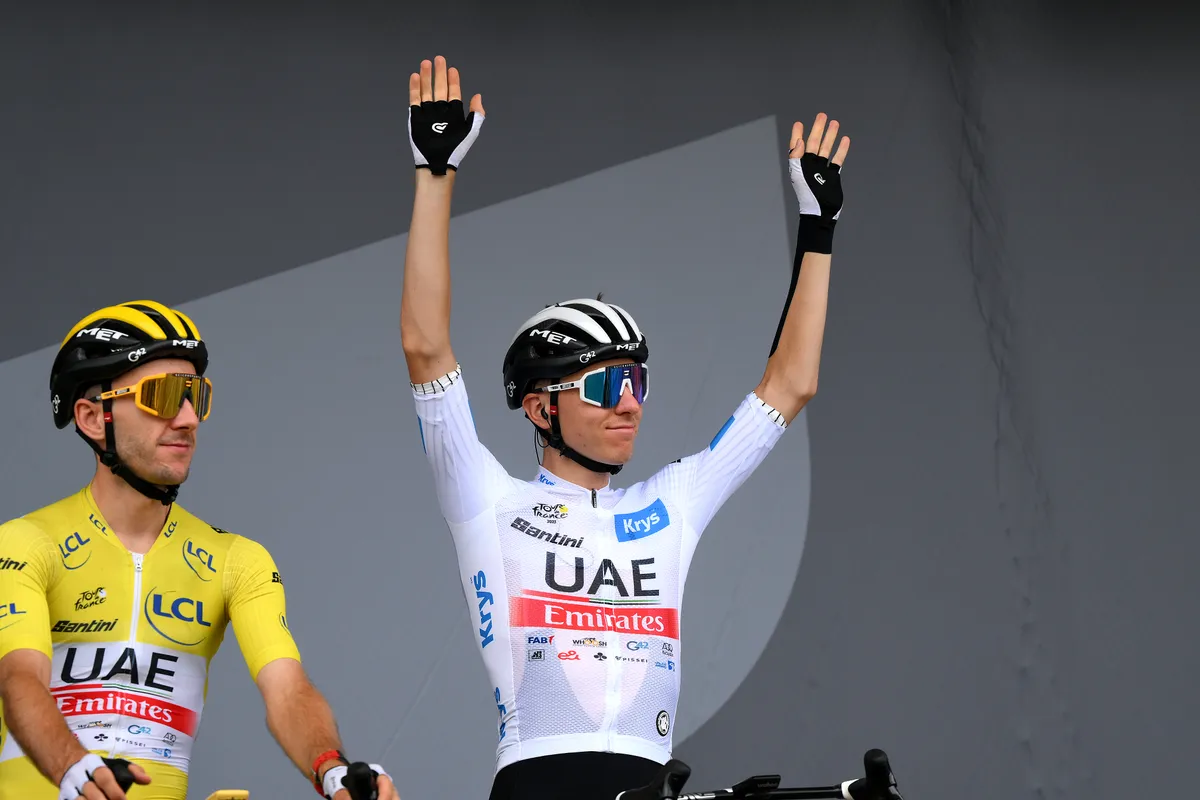
Tadej Pogačar has also been wearing Rule 28’s Aero Base Layer – a base layer with ridged sleeves designed to reduce a rider’s aerodynamic drag – underneath the young rider classification leader’s white jersey.

The main cost for using these instead of standard versions is comfort, but some teams are going further and risking more punctures for marginal gains in rolling resistance.
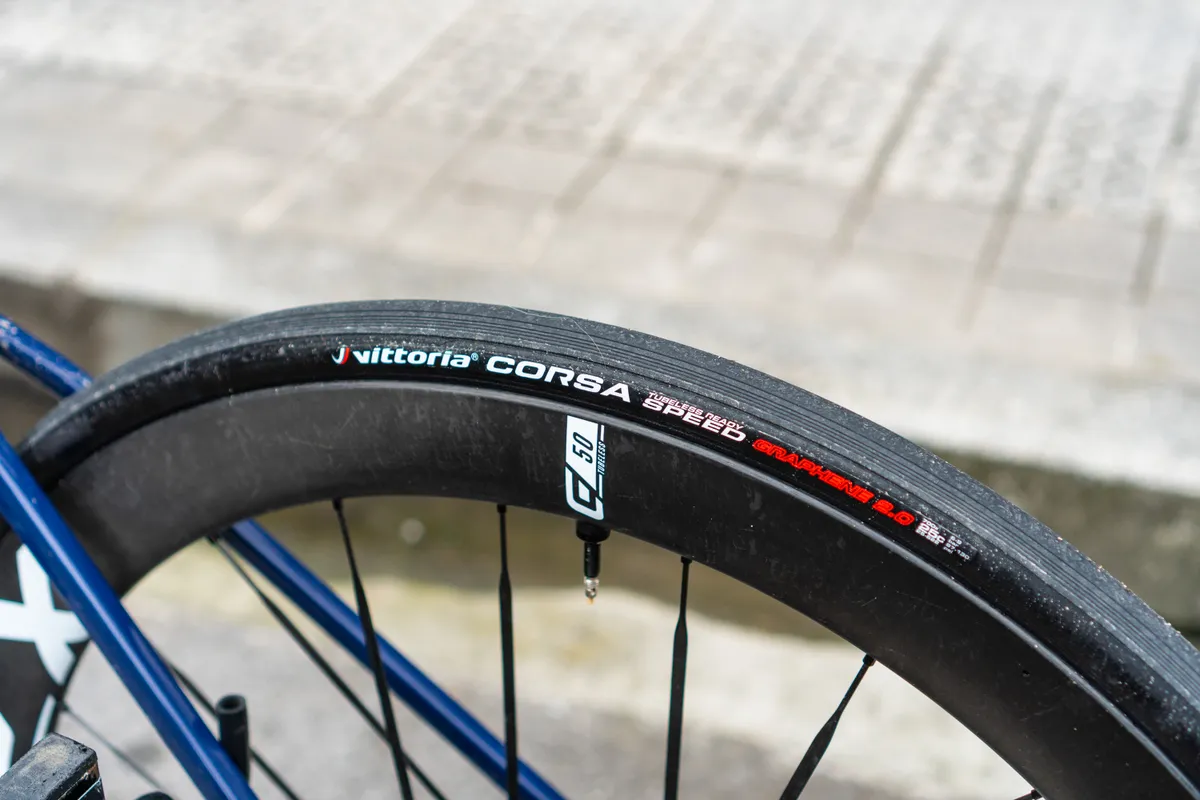
So far, we’ve seen riders from UAE Team Emirates, Ineos-Grenadiers and Bahrain Victorious all using time trial-specific Continental GP5000 TT TR tyres for road stages.

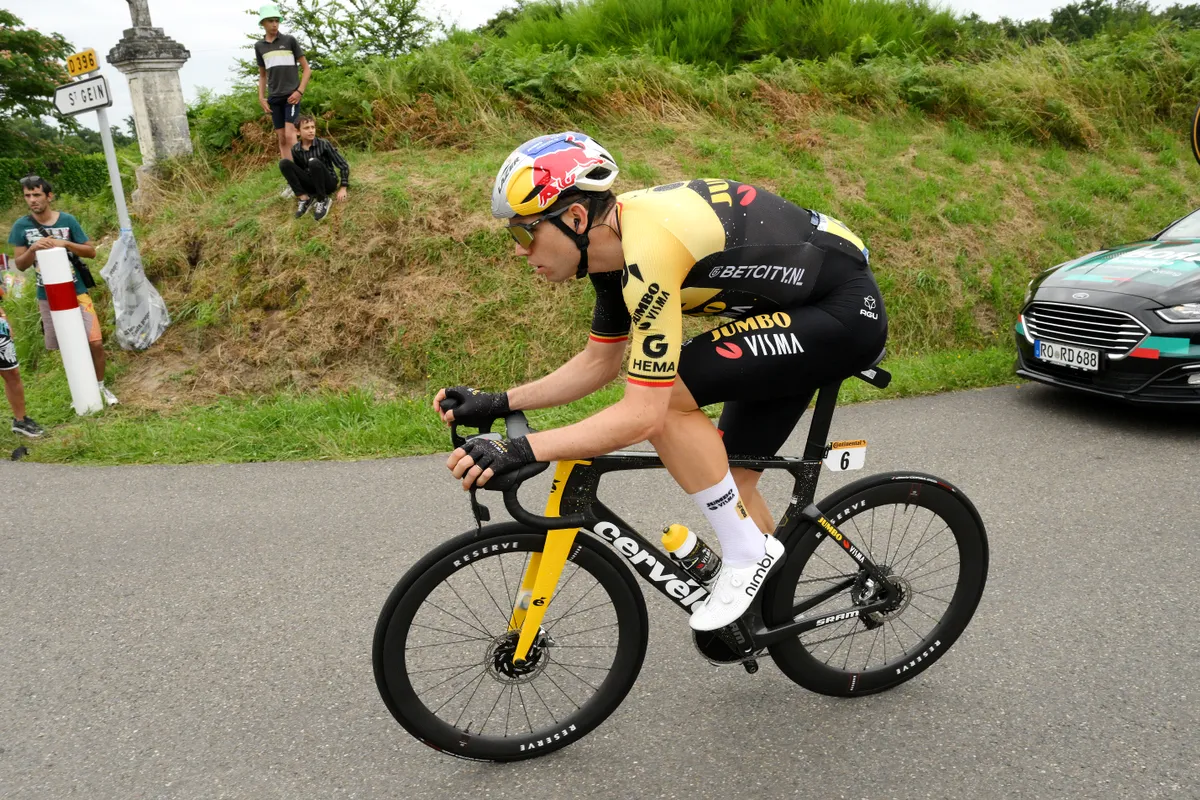
Wout Van Aert also used Vittoria Corsa Speed G2.0 TLR tyres (Vittoria’s time trial-specific tubeless tyre) for stage 4, while we saw a Team Jayco-AlUla Giant Propel Advanced SL 0 equipped with the same tyres in the days before the race start.
It’s notable that the riders and teams doing this seem to be ones using tubeless wheels and tyres.
We suspect the fact that tubeless sealant can potentially help seal any untimely punctures is encouraging some teams to take their chances.
Of course, there’s still the reduced wear life of the thinner treads to contend with on these kinds of tyres, but, when you’re not paying for your equipment, and have a small army of mechanics at your disposal, that’s less of an issue.
Handlebars are getting narrower
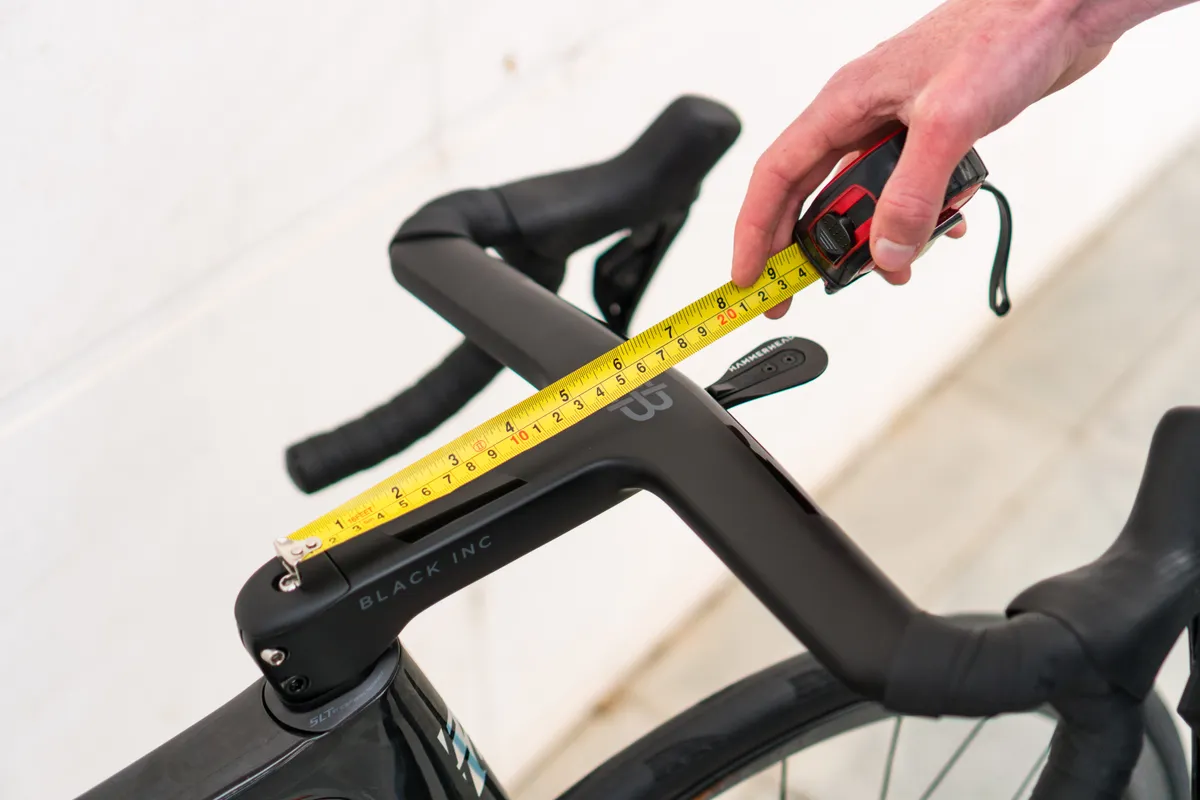
As most of us are aware, it doesn’t matter how aero your bike is if you don’t adopt an aerodynamic riding position.
With that in mind, most of the bikes we saw at this year’s Tour were fitted with long stems and narrow handlebars, to help the riders get stretched out and lower their frontal area.
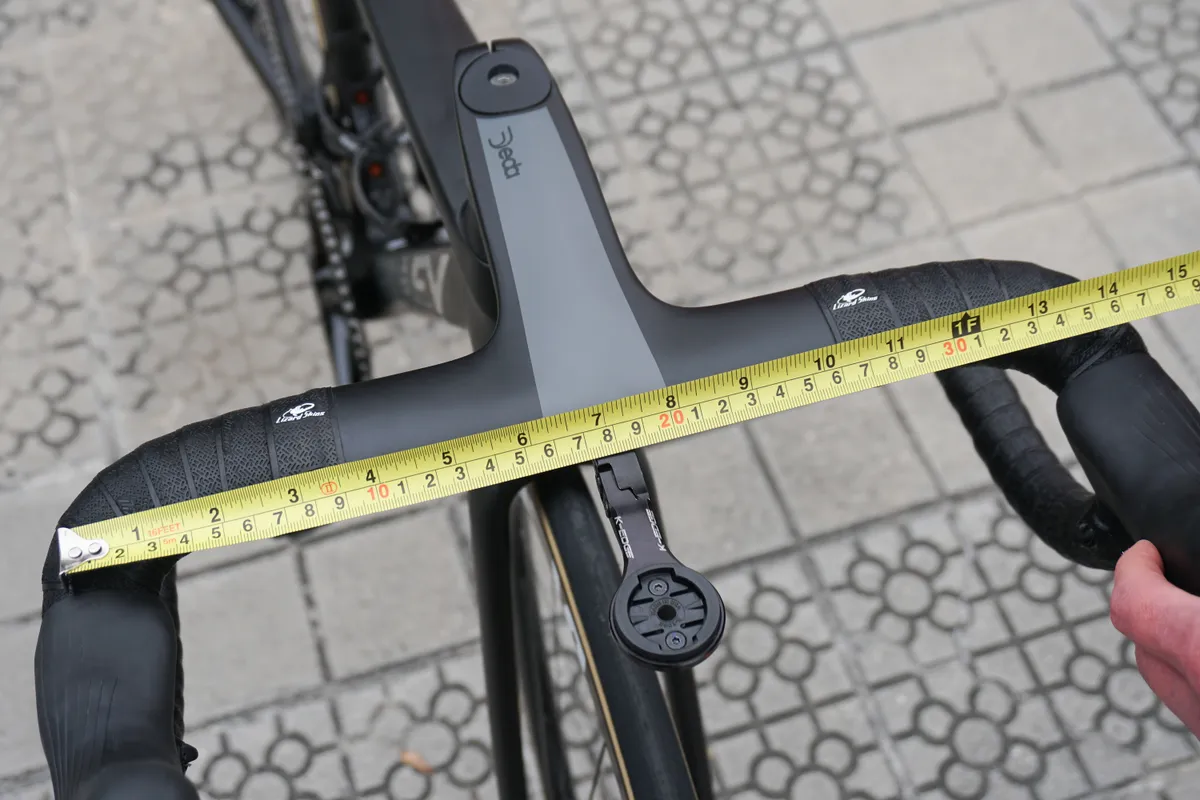
Caleb Ewan, for example, had a Deda integrated handlebar on his new Ridley with an enormous 14cm stem and a super-narrow 36cm handlebar – perfect for helping the diminutive sprinter squeeze through tight spaces in the bunch.
While seeing the narrowest bar widths on the bikes of smaller riders isn’t a surprise, even taller riders are using skinny bars at the Tour these days too.
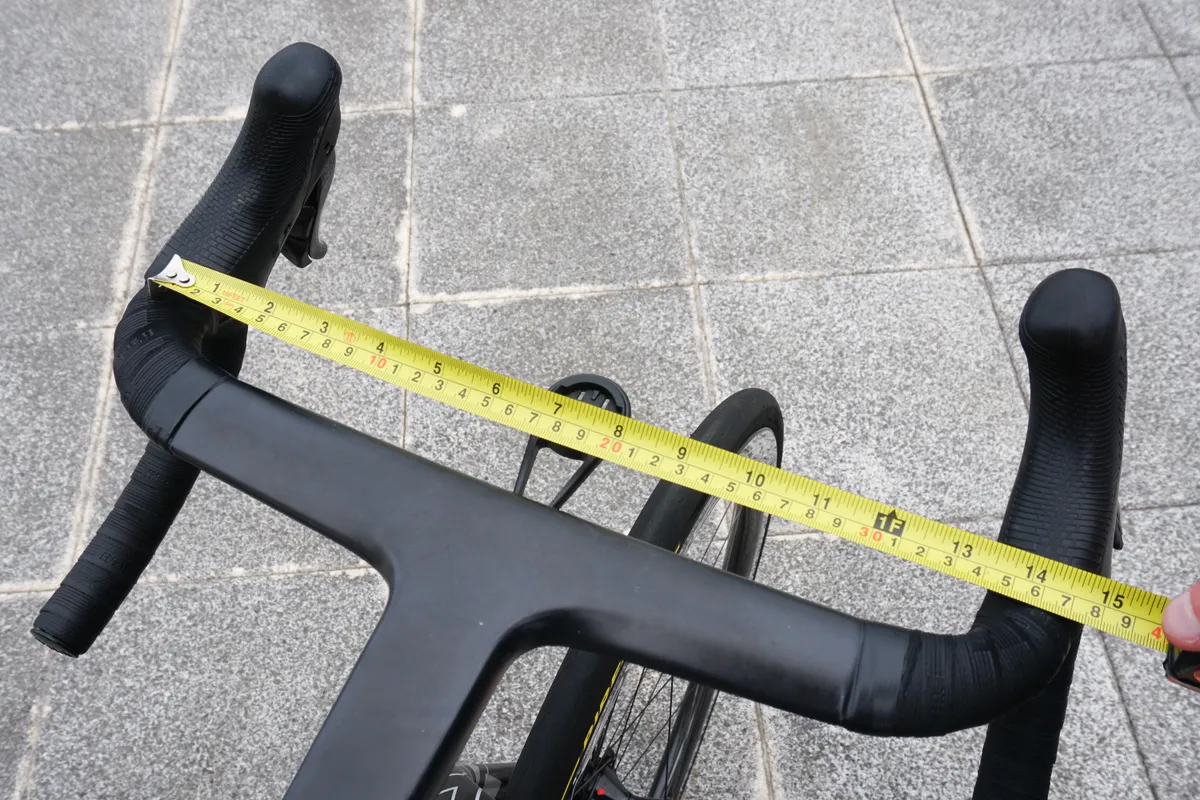
AG2R-Citroen’s Ben O’Connor, for example, is reportedly 188cm tall, but had a 36cm wide handlebar (also paired with a 14cm stem) on his prototype BMC aero bike.
Even climbers, such as Richard Carapaz (EF Education-EasyPost) and Jonas Vingegaard, are using relatively narrow 38cm handlebars – presumably they don’t mind giving up a little leverage for the potential aero gain.
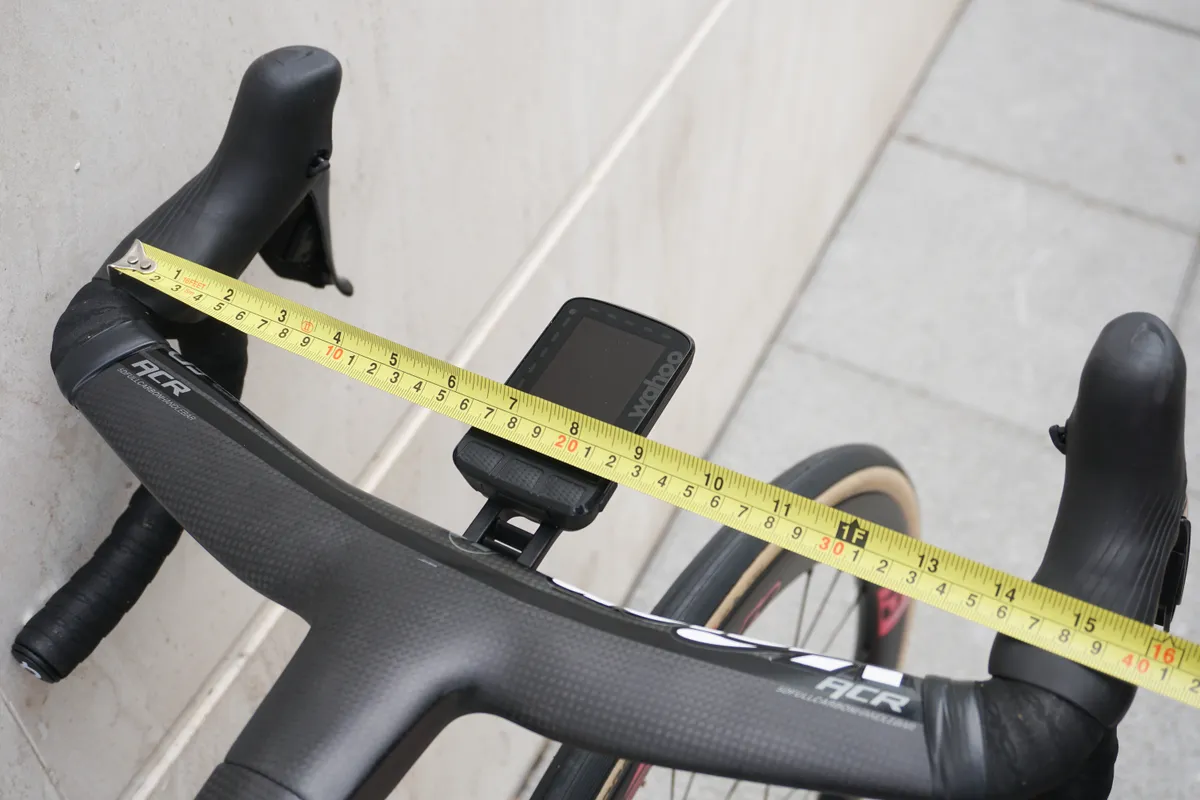
The widest bars we saw in Bilbao were just 40 centimetres wide – on Mathieu van der Poel’s Canyon Aeroad and Mark Cavendish’s Wilier Filante SLR, although, like many, van der Poel turns his brake hoods in, which effectively gives him a narrower position hand.
Of course, there likely are some riders in the bunch still on 42 or 44cm wide handlebars, but it’s certainly a dwindling number.
Haves and have-nots
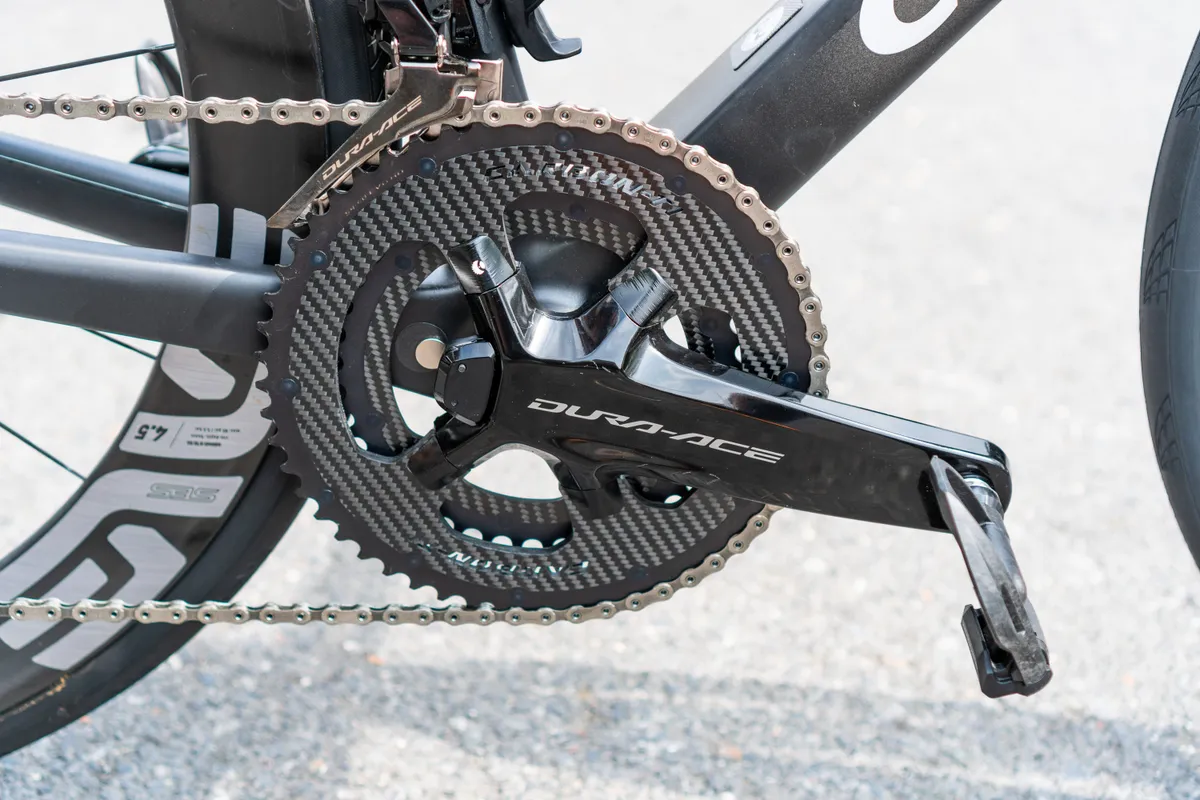
There’s no budget cap in professional cycling and a race like the Tour de France can painfully expose the differences between teams even at the top of the sport.
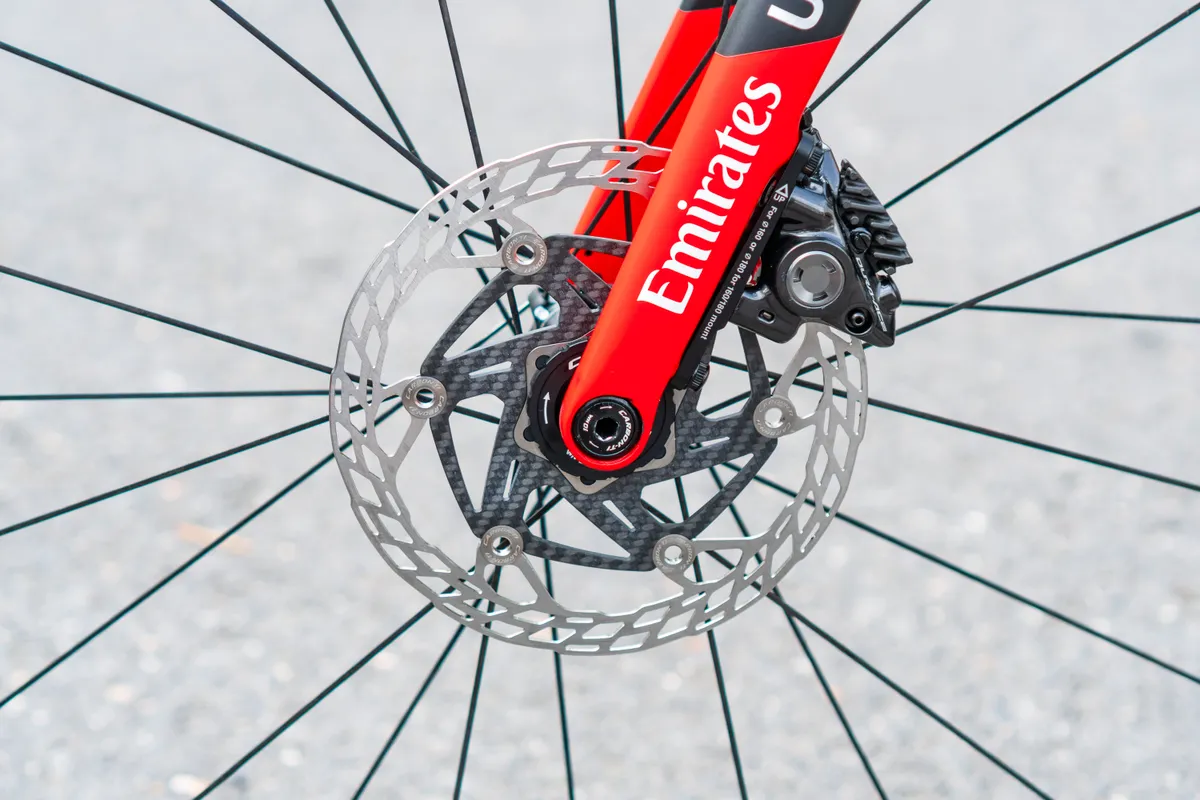
Some UAE Team Emirates riders, for example, appeared to have every piece of bling available – from the time trial-specific GP5000 TT TR tyres already mentioned, to ENVE wheels and components, weight weenie parts such as Carbon Ti chainrings and brake rotors, and ultra-light custom carbon seat posts.
In contrast, though, Peter Sagan and his Total Energies teammates are still running the previous generation Dura-Ace Di2 R9100 groupset and Specialized Turbo Cotton clincher tyres that were launched nearly 10 years ago.
There’s nothing wrong with 11-speed Dura-Ace, of course – just because there’s something new available, doesn’t mean the old stuff is suddenly rubbish – and the Turbo Cotton tyres are still regarded as some of the fastest clinchers ever made.

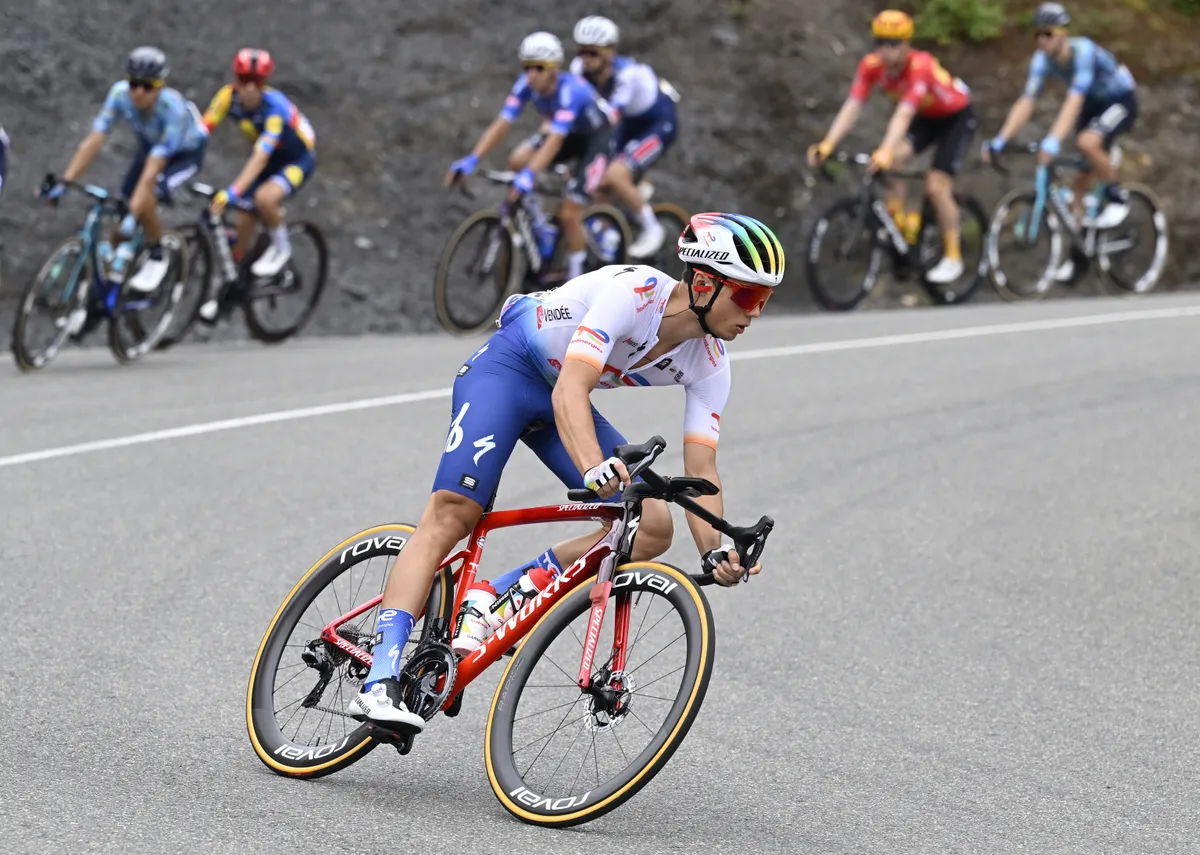
However, it’s hard to ignore the obvious disparities between one of the best-funded teams in the peloton and one which perhaps isn’t quite as flush with cash.
That said, it’s fair to question how much of a difference all of this makes.
It doesn’t matter how posh the bike is – the rider still has to turn the pedals, after all.
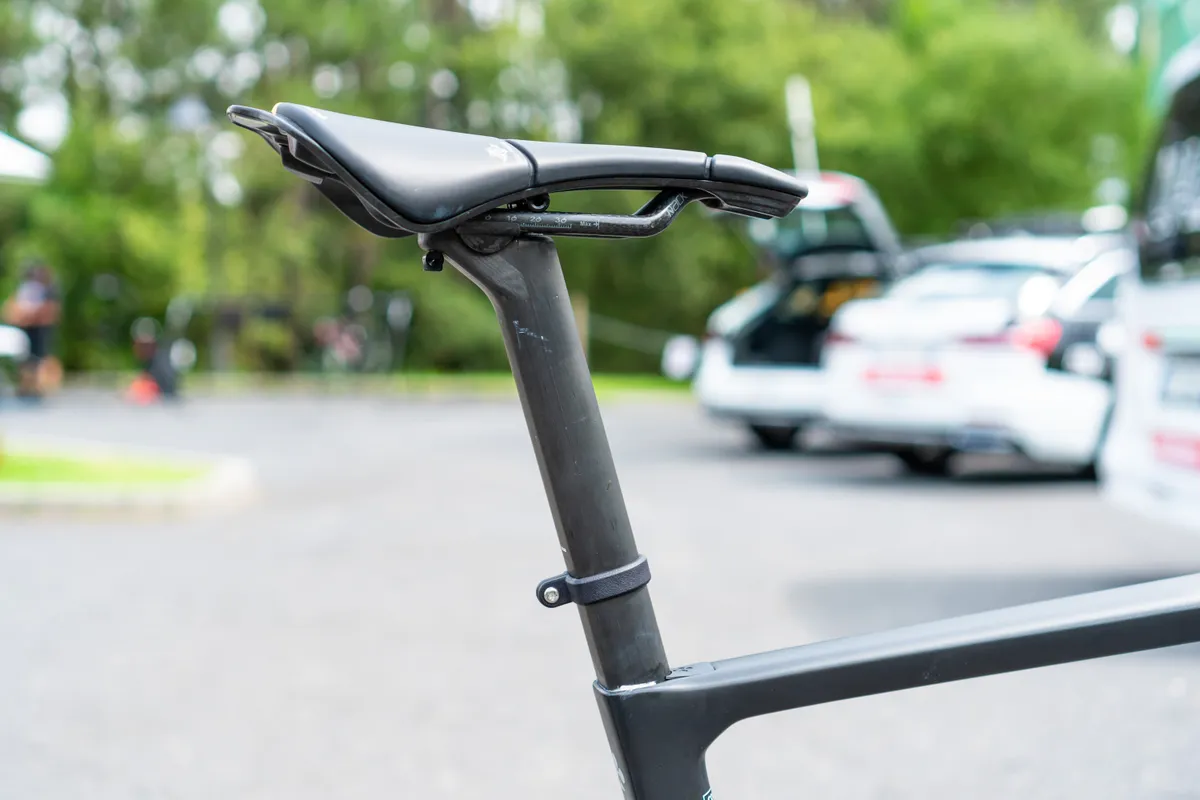
But considering the margins between winning and losing can be so small at this level, these small differences can add up, especially over the course of a three-week Grand Tour.
Maybe it’s time to introduce budget caps in cycling and level the playing field a bit? Let us know what you think in the comments.
link