
10 Most Ridiculous Car Features Ever
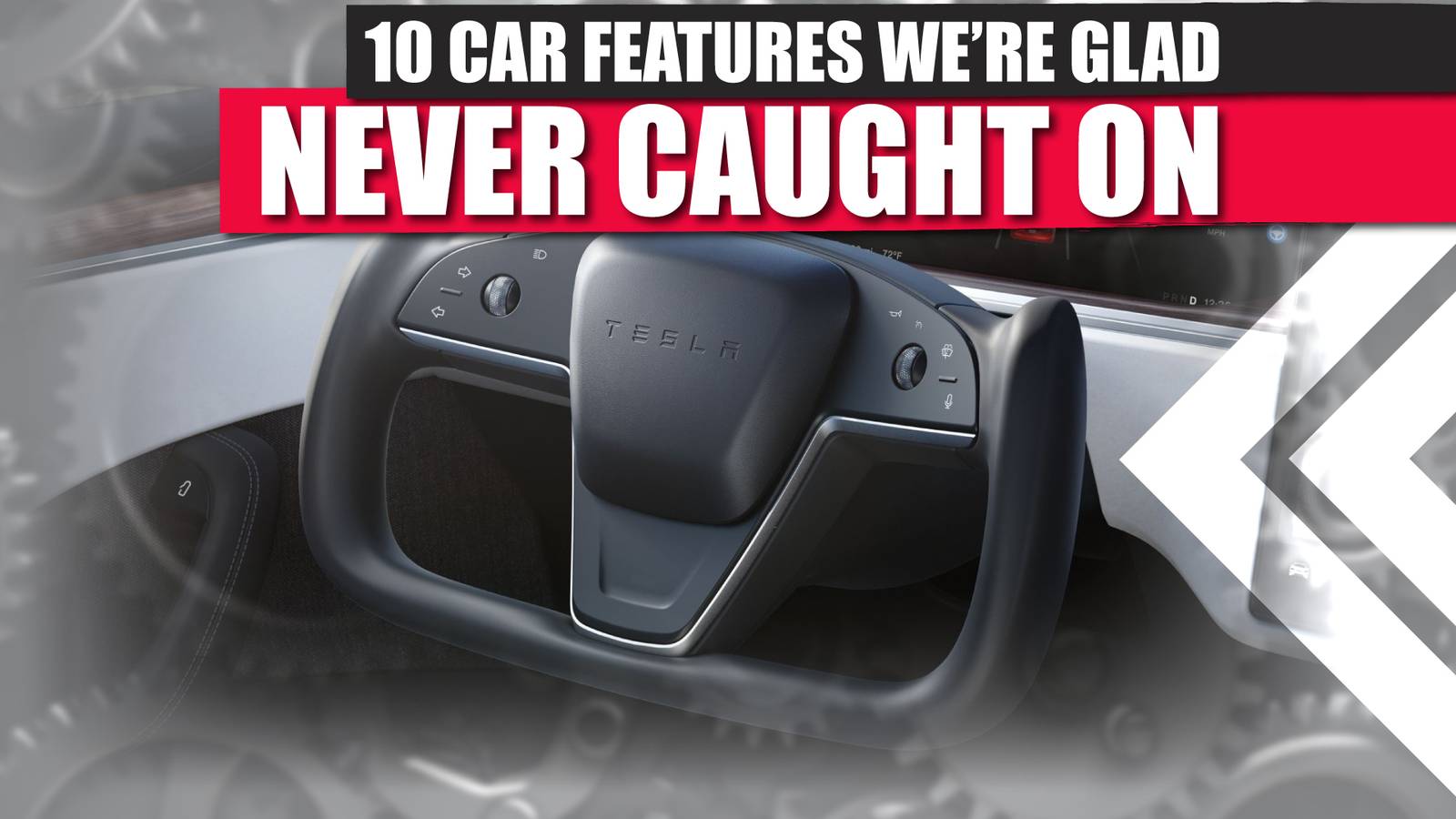
Ever notice how carmakers sometimes chase tech trends that make driving worse, not better? The industry loves a flashy idea, even if it ruins something that already worked fine. Just because you can, doesn’t mean you should. From automatic seat belts to steering wheels shaped like video game controllers, some of these “innovations” were just plain dumb. They looked futuristic in press photos, but behind the wheel, they were frustrating at best and dangerous at worst. Here are ten car features we’re genuinely glad never caught on, reminders that progress only matters when it makes driving better.
10
Touch Capacitive Steering Buttons
The Feature Nobody Asked For

Volkswagen thought they’d reinvent the wheel, literally. The Golf Mk8 and ID.4, and even Land Rover ditched physical buttons for sleek, touch-sensitive pads on the steering wheel. In theory, it looked futuristic, but in reality, it was infuriating. Drivers complained that even brushing the pad during a turn could activate volume changes, skip songs, or trigger driver assists. Gloves made it worse, and cold-weather usability dropped to near zero. VW eventually listened, admitting defeat and bringing real buttons back on newer models. There’s a reason Porsche, Toyota, and even BMW stuck with proper tactile controls. You shouldn’t have to look down just to change a song. Some car features we’re glad they never caught on, and this one tops that list.
9
Automatic Seat Belts
Safety Gimmick That Made Everyone Nervous

n the late ’80s and early ’90s, U.S. safety regulators pushed for passive restraint systems before airbags became mandatory. The result was the automatic seat belt—an odd contraption that crawled along the door frame when you started the car. It looked clever at first, but quickly became a headache. The motorized tracks jammed, the belts wore out, and half the time they’d strangle you mid-entry. Many drivers just left them disconnected. The Toyota Camry, Honda Accord, and Nissan Maxima all tried it before everyone realized airbags did the job better and cleaner. Even the NHTSA dropped support once airbags became standard. It’s one of those relics that reminds us that safety needs brains, not gimmicks.
8
Vinyl Tops As Fake Convertible Roofs
Trying Too Hard To Look Fancy

Remember when luxury meant slapping vinyl on the roof and calling it “class”? The fake convertible roof, also known as the Landau top/Vinyl top, was a 1970s and ’80s design fad meant to mimic old-school drop-tops. Cars like the Cadillac Fleetwood, Lincoln Town Car, and Chrysler Fifth Avenue wore them proudly. The problem was, the vinyl trapped moisture, added weight, and caused rust faster than a Midwest winter. As design moved toward sleeker, aerodynamic lines in the ’90s, the look died off quietly. Today’s luxury cars focus on clean proportions, smart materials, and aerodynamics that actually do something. The fake roof? A reminder that good taste can’t be glued on.
7
In-Car Televisions
Because Drivers Really Needed Distractions

Before Netflix on headrests became a thing, carmakers flirted with actual in-car TVs. These weren’t the crisp HD screens you’d find in a BMW Theatre Screen or Lexus LM today. We’re talking small, grainy analog displays with rabbit-ear antennas that picked up local channels, if you were lucky. Some were mounted up front, dangerously within the driver’s view, in cars like the Oldsmobile Silhouette. The idea of watching The Simpsons at a stoplight might’ve sounded futuristic in the ’80s, but it was a disaster for safety. Even Japan’s luxury flagship, the Toyota Century, toyed with built-in TVs before quickly shelving the concept. Today’s streaming systems, controlled by rear passengers and integrated with seat entertainment suites, finally get it right. But those early TV experiments? Just proof that attention spans and steering wheels never mixed well.
6
Fully Touchscreen Dashboards
The Tech Trend That Aged Badly

At one point, every automaker wanted to copy Tesla’s clean, buttonless look. The VW ID.3, Hyundai Ioniq 5, and even the early Tesla Model 3 all embraced full-touch dashboards. They looked sleek in photos but drove like a UX nightmare. Glare in daylight, laggy menus, and haptic feedback that barely worked made basic tasks, like changing A/C or volume, require full attention.
VW executives later admitted they’d gone too far, and future models like the ID.4 now bring physical knobs and sliders back. Hyundai quietly followed suit with the Ioniq 6, proving that drivers still value muscle memory. Safety studies back it up, too: tactile controls cut distraction time by up to 50%. Touchscreens might have simplified dashboards, but they complicated driving.
5
In-Dash Coffee Makers
Imagine Spilling Scalding Hot Water While Driving

The Fiat 500L’s in-dash Lavazza coffee maker looked like the ultimate Italian flex – espresso on demand, right from your cupholder. Except it wasn’t. The system needed special pods, frequent cleaning, and added unnecessary cost. And let’s not forget the risk of spilling boiling coffee while merging onto the freeway.
Regulatory agencies outside Europe weren’t thrilled about it either, so the feature never made it to the U.S. Despite being peak “quirky Fiat,” it was a gimmick that didn’t age well. Carmakers learned that drivers want convenience, not a mobile café. These days, a heated cupholder or a drive-thru Starbucks app shortcut feels like a smarter evolution of that same caffeine dream.
4
Subscriptions For Heated Seats
The Paywall Nobody Wanted

Few car features triggered as much internet rage as BMW’s heated seat subscription. The brand tested it in select markets through ConnectedDrive, offering access to seat heaters via a monthly fee. The logic made sense internally: use over-the-air (OTA) software to unlock hardware already installed in the car. But to buyers, it looked like paying rent for something they already owned. The backlash was immediate, global, and loud.
BMW backed off, pivoting to true digital upgrades instead – features like remote start and drive mode personalization that actually add new functionality. Tesla’s OTA power boost upgrades showed how to do it right: pay once, get measurable gains. The heated seat paywall, on the other hand, became a textbook case of how quickly goodwill can evaporate when innovation feels like a cash grab.
3
Gesture Control
Waving And Being Ignored By Your Dashboard

When BMW launched gesture controls in the 2015 7 Series sixth-gen, it felt like the future. Drivers could twirl their fingers in mid-air to change volume or flick to answer calls, all tracked by infrared sensors. For about ten minutes, it was impressive. Then, frustration set in. The sensors were overly sensitive, misreading casual hand movements as commands. Drivers found themselves accidentally hanging up calls or blasting the radio while talking.
Later versions of iDrive 8 quietly scaled the system back, focusing instead on improved voice commands and touchscreen responsiveness. Audi and Mercedes tried similar gimmicks but quickly realized the same thing – buttons and dials work because they’re predictable. BMW’s experiment proved one point loud and clear: technology should make driving easier, not turn it into a game of charades.
2
Tesla’s Touchscreen Gear Selector
Innovative Way To Cut Cost

In Tesla’s push for minimalism, the Model S Plaid replaced the traditional gear selector with an on-screen swipe gesture. The idea: use software to predict which direction you’ll drive based on sensors and context. In practice, it was clunky. Drivers had to look down, tap a tiny corner of the screen, and hope the car guessed right. In an emergency, that delay could be risky.
The NHTSA wasn’t thrilled either, flagging the design as a potential distraction. Tesla later reintroduced physical stalks on newer Model S and Model 3 Highland versions, a quiet admission that innovation to save cost had gone too far. Even for a tech brand built on disruption, some controls are better left mechanical. When your “gear shift” needs a software update, something’s gone terribly wrong.
1
Tesla’s Yoke Steering Wheel
Half The Steering Wheel, Double The Trouble

The Model S Plaid’s yoke steering wheel promised an aircraft-inspired experience for the street. What drivers got was a daily workout. Parking, tight turns, and low-speed maneuvers became awkward because of the missing upper rim. Tesla defended it as a modern design, but driver feedback told another story. Many owners swapped back to the optional round wheel the moment Tesla offered it. The NHTSA also took notice, raising concerns about control consistency. Lexus tried a similar approach on the RZ but paired it with true steer-by-wire tech, which actually made the yoke usable. That contrast highlights Tesla’s mistake: innovation without adaptation. Cool ideas don’t mean much when they make a simple three-point turn feel like piloting a spaceship with missing parts.
link