
Tesla Will Never Build an Electric Motorcycle, Maybe a Dirt Bike

By Karan Singh
In an era where Tesla seems willing to build anything — from humanoid robots to bulletproof trucks – there is one product category that remains strictly forbidden. Following an AI-generated video that sparked commentary on Tesla offering an EV motorcycle in the future, Elon Musk has confirmed that he never intends to let it happen.
This isn’t just a business decision; it is a hard philosophical line that’s rooted in Elon’s own history. While investors and enthusiasts have long requested that Tesla build a two-wheeler EV, a sector currently ceded to niche players like Zero, Elon’s refusal is a rare instance of a line that Tesla just won’t cross.
The Trauma Behind the Policy
Elon’s aversion to road bikes isn’t theoretical. In his recent post, he once again iterated the reason why he believes they just aren’t safe.
According to his biography, as well as past shareholder meetings where he has spoken on the subject, the incident occurred when Elon was 17 years old. While riding a road bike, he was nearly crushed by a truck. That moment permanently altered his risk assessment of two-wheeled transport.
For a man who calculates the probability of rocket failures and existential AI threats, the physics of a motorcycle collision is just simply too much of a risk.
This isn’t a brand conflict with Tesla’s identity — in fact, it fits right in. Tesla places a great emphasis on safety — and in fact, that’s the driving reason to perfect FSD. With Model 3 and Model Y consistently achieving the highest safety ratings in automotive history, Tesla has set a standard. And it simply isn’t possible for a motorcycle to achieve the safety threshold that Tesla demands — no matter how much software you add.
Never happening, as we can’t make motorcycles safe.
For @CommunityNotes, my near death experience was on a road bike.
Dirt bikes are safe if you ride carefully, as you can’t be smashed by a truck.
— Elon Musk (@elonmusk) December 1, 2025
The Dirt Bike Loophole
Elon did leave a familiar door ajar once again, just not for the street. Elon has previously expressed interest in both dirt bikes and quads (the forever-delayed Cyberquad comes to mind), but Elon specifically mentioned that he believes that dirt bikes are safe if you ride carefully.
The reasoning here is fairly logical – the danger for a road bike comes from other vehicles, while the danger with a dirt bike comes from the terrain. In Elon’s view, the latter is a manageable risk, while the former is a death trap.
The Verdict
For those waiting for a sleek, FSD-equipped EV motorcycle to commute to work, give up. The never in Elon’s statement has been absolute for nearly a decade now, and Tesla simply has no interest in building one. However, if you’re interested in a dirt bike, Tesla isn’t saying no.
By Karan Singh

No one ever plans to be in an accident. But in the chaotic moments during and after a collision, being prepared can make all the difference for your safety and the safety of your passengers.
Your Tesla has a unique set of safety features, as well as some unique procedures that are critical to understand in the event of an emergency.
This guide is your calm, clear checklist. Read it now, share it with your family, and familiarize yourself with these procedures. Knowing what to do in a worst-case scenario is one of the most important things you can do as a vehicle owner.
The First 60 Seconds: Immediate Actions
In the immediate aftermath of an incident, such as a collision, your instincts will take over. The key is to have the right knowledge already in place.
Before anything else, slow down, take a deep breath. Check yourself and your passengers for any injuries. If it is safe to do so, place your vehicle in Park. In most cases, the airbags will have already deployed, so your vehicle will do this for you, as well as automatically turn on the hazard lights and unlock the doors.
A common immediate thought is the high-voltage battery pack you’re sitting on. There’s a lot of potential energy under your butt, but Tesla has multiple safety systems in place. Upon detection of a significant impact or upon deployment of your airbags, a pyrotechnic fuse automatically and instantly disconnects the high-voltage battery from the rest of the vehicle, thereby securing it and making the cabin safer.
Nowadays, First Responders around the world are well-trained on how to approach and handle electric vehicles in the event of an incident. Tesla also provides first responder guides for all of their vehicles and equipment, including detailed Rescue Sheets. These can help first responders identify where and how to approach, and what cables to cut to disconnect the HV battery if required.
The Next 60 Seconds: Getting Clear
While the pyrotechnic fuse disconnects the high-voltage battery, there is still the risk of a fire. If the battery has suffered considerable damage, you’ll want to exit the vehicle as quickly and safely as possible. While EVs are much less likely to catch fire than internal combustion vehicles, their fires are often much more difficult to put out.
In most situations, the electronic door buttons will continue to function normally, as they are powered by the low-voltage battery, which is not disconnected in an accident. But if the vehicle has lost its low-voltage power, you must know how to use your vehicle’s interior manual door releases. The external handles on the vehicle will not work if the vehicle has lost power, and the door is not openable from the outside in these situations.
The interior manual door releases for Tesla’s vehicles vary by model and year, but in general, the rear doors don’t have manual release cables (in older models) or are hard to access. It’s worth getting familiar with your vehicle ahead of time and making your immediate family know the basics of using the manual release on the front doors.
Tesla is redesigning door handles to address these issues, but if the electronic door button doesn’t work, a passenger’s best bet is usually to hop out through the front.
We’ll provide generic instructions for the most recent models below, but we highly recommend referring to your vehicle’s owner’s manual for the particulars, especially for the rear doors.
Open Tesla Doors With No Power

The information below applies to all recent Tesla models, excluding the Model X.
Front Doors: The manual release for these vehicles is a manual lever located directly in front of the window switches on the armrest. Pulling this lever upwards will unlatch the door.
Rear Doors: Unlike the front doors, Tesla models lack an easily accessible manual release for rear passengers. Most, but not all, vehicles include a cable that must be pulled from inside the door pocket. However, the way you access this cable, or whether your vehicle includes one at all, depends on the year and where your vehicle was built.
The best-case scenario is the photo above, where the rear doors include a labeled flap in the door pocket. Under the flap, there’s the manual release cable that needs to be pulled to unlatch the door. Older Model 3 and Model Y vehicles may not include a manual release. And in some German-made vehicles, it may be a cut-out piece of carpet you need to lift and pull out first. It’s important to be familiar with what you have in your vehicle and how to use it.
If your vehicle has one, pulling on the manual release cable will unlatch the door, allowing you to open it. In general, it is likely faster and easier for rear passengers to exit through the front doors if they’re capable.
Once you exit the vehicle, do not close the doors behind you. Your vehicle will lose power, and you will be unable to access it again, if it is safe to do so and you need to.

Open Model X Doors With No Power
Front Doors: This procedure is the same as the other models. There’s a black, somewhat hidden lever at the bottom of the door pull that you need to lift.
Falcon Wing Doors: To open the Falcon Wing doors, you must remove the lower speaker grill from the door and then pull down on the cable towards the front of the vehicle. This isn’t easy, and even if you get the grill off and manage to pull the cable, the door still has to be manually lifted. Rear passengers are encouraged to exit through the front doors.
Once you exit the vehicle, do not close the doors behind you. Your vehicle will lose power, and you will be unable to access it again, if it’s safe to do so later.
Exterior Handles
While Tesla has manual door releases inside the vehicle, all door handles on the outside rely on electronics, so they won’t work if power has been cut to the low-voltage battery. This means someone outside the vehicle won’t be able to help anyone on the inside without breaking a window or other means.
China has upcoming regulations that may force Tesla to change this design and alter the iconic door handles on the Model S. This will eventually lead to safer vehicles in extreme situations, but today it’s important to know someone on the outside won’t be able to open the doors for you if the vehicle doesn’t have power.
Special Cases: Submersion
While extremely rare, a submersion event is a serious danger. The procedure is different than any other incident, and requires you to act quickly.
Don’t wait — as soon as the vehicle enters water, unbuckle your seatbelt, as your vehicle will begin to take on water quickly. Immediately lower the windows before the water level rises above the door — the low-voltage power should function for this task.
If it doesn’t, attempt to push the doors open using the manual releases as described above. Water pressure may make this task extremely difficult. The last resort is to break your vehicle’s glass. A window-breaking tool or other sharp, pointed object aimed at the corner of a side window will help crack it; however, recent vehicles feature double-laminated glass, making the window hard to put anything through.
Immediately exit the vehicle and help any passengers to do the same. Clear the site and do not attempt to recover your belongings from the submerged vehicle.
After the Crash: Securing the Scene & Yourself
Once you are safely out of the vehicle, there are several steps to take. Your Tesla’s technology can be a major asset here, depending on the situation and where you are.
Before doing anything else, call for emergency services. Inform the dispatcher that you have been in an accident, and inform them of any injuries to you or your passengers. Make sure to inform them that you were in an electric vehicle.
This allows first responders to prepare fire equipment that is suitable for an EV accident, if required.
Your Tesla will immediately record and save data if an accident is detected through its Dashcam feature. You can also have the vehicle record the last 10 minutes of footage by manually tapping on the Dashcam icon or honking on the horn. If the vehicle is powered, the vehicle will continue to record and overwrite footage. It only holds on to the last 60 minutes of video and will overwrite any footage that hasn’t been saved by one of the means above.
Crash data is also uploaded to Tesla’s servers and can be requested with a Vehicle Data Report. VDRs do not always include video, but sometimes do, depending on whether the vehicle has the bandwidth and power to upload.
Preparing for Recovery & Repair
Once life and limb aren’t at stake, you can then think about your vehicle and belongings.
If your vehicle is still in operable condition and not in a dangerous location, you can enable Tow Mode.
If your vehicle is repairable, you’ll want to insist on having a Tesla-approved Collision Center perform the repair, rather than your preferred insurer location. Non-certified shops lack the training and equipment to properly repair your vehicle, which could compromise its structural integrity and the functionality of its safety systems.
Knowing these procedures empowers you. By understanding the unique safety features of your vehicle, you can stay calm and act decisively, ensuring the best possible outcome in a worst-case scenario.
By Karan Singh
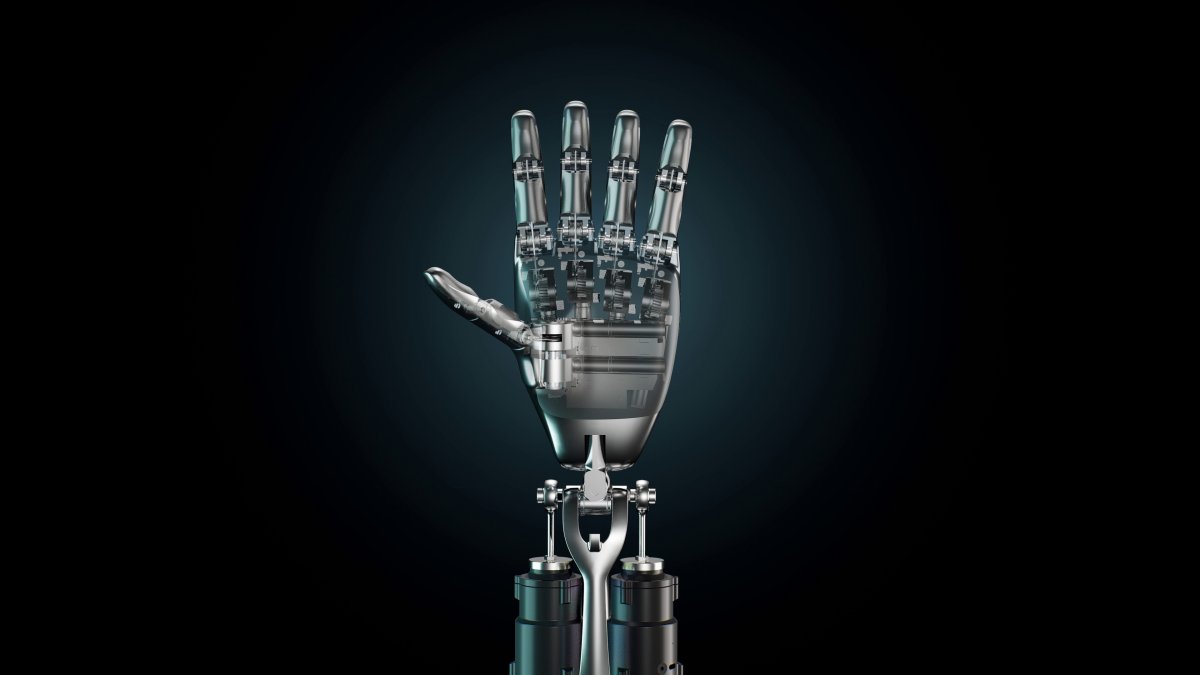
Tesla is pushing hard on its mission of sustainable abundance, and the key to that vision of the future is through its humanoid robot, Optimus.
Tesla is set to unveil Optimus Gen 3 in a production-intent prototype in Q1 2026. However, just like FSD, it’ll be a series of milestones and goals that span multiple years.
Optimus Milestones
Tesla has several upcoming milestones for Optimus:
Tesla is already installing the first-generation production lines in its factories this year and focusing hard on vertical integration, including custom motors and joints, all fabricated in-house to leverage Tesla’s manufacturing expertise.
Hardware Leaps and Bounds

Gen 3 won’t be an incremental tweak. Besides the focus on building a robot that can actually be mass-produced, Tesla has also worked carefully on Optimus’ hands. Tesla’s engineers have focused on closely replicating the human hand, offering 22 degrees of freedom that enable human-level precision.
Whether that’s folding laundry, poaching an egg, or tightening a bolt, Optimus will be able to carefully work on precise tasks, while bringing a hauling capacity of 45lbs — enough to move your groceries or a bin of industrial parts.
Tesla has updated Optimus’ body too, including improved balance for dynamic environments, as well as energy-efficient joints that sip power.
Big AI Brain
Optimus doesn’t learn in isolation; instead, it taps Tesla’s second field of true expertise – AI. The same FSD neural networks that drive your car are used on Optimus. Photons go in, actions come out – including bi-pedal navigation and daily tasks.
Essentially, Tesla has three steps to train Optimus. They ingest training videos of first-person human demos, as well as third-person demos for broader generalization purposes. Then, they train Optimus in virtual worlds – on silicon first. Finally, they conduct the tasks in the real world as demonstrations of the learning process.
Alongside that, Tesla is working on integrating Grok into Optimus so that it can rationalize decisions with xAI’s large language model, as well as speak and interact with humans in the world around it.
Factories First, Abundance Next
Tesla’s rollout for Optimus will be internal first. With just a few deployed into factory positions initially, the goal is that thousands will be deployed by the end of 2026 to help cut manufacturing costs and improve worker safety, but Tesla will likely use this as a testing ground helping them discover and solve issue with Optimus first.
One Optimus will eventually be equal to 5x human productivity, at a much lower expense, running 24/7 if tethered, without breaks.
The feedback loop really kicks off once you have robots building more robots.
Optimus For Home?
After that, the consumer phase follows, with a price goal between $20,000 to $30,000 USD, Optimus is intended to be accessible, performing boring, repetitive, or dangerous tasks, all without human interaction. That’s where the infinite money glitch that Elon has previously mentioned comes into play.
Optimus has the ability to end labor shortages and boost productivity, while humans can benefit from being removed from physical or boring labor and can focus on more intellectual tasks.
Where Sustainable Abundance Comes True
Imagine Optimus maintaining your fleet of Robotaxis, cleaning any debris or fixing some damage. At the same time, both are being charged from a Powerwall that charged up at extreme off-peak rates overnight or through rooftop solar.
Tesla’s entire goal is this cycle, where the boring, the repetitive, and the dangerous are completely removed from the human productivity cycle. Instead, as this dream grows, step by step, humans can instead focus on their personal pursuits, leaving the labor force for robots.
It is a truly grand vision, and one that’ll be extremely difficult to execute — but if anyone is willing to pursue the impossible and take on the risks involved, it’s Elon Musk.
Q1 2026 will be the litmus test for Tesla’s dreams and visions — and we’re all hoping they’ll make it a reality.
link