Best flat road bike pedals: 12 options if you don’t want to go clipless
Whenever you buy a new bike it tends to come with the cheapest, worst pedals you can imagine. The manufacturers assume these will be swapped out with extreme haste, but they have to give you something at least. Normally for road bikes people opt for some of the best road bike pedals, clipless ones that attach your shoe to the pedal, but this isn’t for everyone. If you’ve bought a gravel bike there are the best gravel bike pedals to choose from, but the majority of them are clipless too.
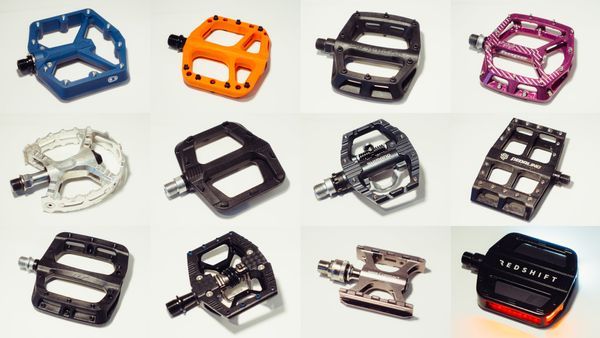
I’ve picked 12 options that should cover all bases. Many are mountain bike pedals, but that doesn’t mean you can’t use them on the road, while others feature lights, or are easily removable for storage if you have a folding bike. As ever, I’ve tried to answer any burning questions that may arise at the bottom of the page if you need a little direction.
Best flat road bike pedals – our picks

+ Grippy
+ Affordable
– Not all pins are replaceable
The PA03-A from HT hits the sweet spot for me. It’s large without being cumbersome, light without being flimsy thanks to a solid plastic body, has some replaceable pins should you want to tune the level of grip you require, and has a relatively low RRP. If you want a jack of all trades to see you through road, gravel, commuting, and MTB without breaking the bank then these should be high on your list. The pedal shape is good and concave too, which is my preference, and locks your feet in place.

+ Highly visible
+ Won’t damage shoes
– High RRP
If you’re shopping for pedals for a commuter bike then these should be top of your list. They’re rather heavy, and the grip isn’t going to rival those pedals brought over from the MTB world, but where the Redshift Arclight shines (quite literally) is in the visibility stakes. In place of the traditional amber reflectors, Redshift has swapped in a pair of modular lighting bars that automatically swap from white to red depending on the orientation of the pedal, and they’re removable for recharging in a handy dock.

+ Low RRP
+ Many colours
– Bearings not the best
If you’re looking for the cheapest decent option then look no further. The DMR V6 has been the go-to budget pedal for years and the design has been more or less unchanges. It shared the same body as the more premium V8 and V12, but here it’s all plastic, including the pins. The platform is a little smaller than the HT option, and the bearings are not so smooth or durable, but if price is your number one priority then you could do a whole lot worse.

+ Blocks, not pins
+ Many colours
– Not as grippy as pins
Flat pedals, specifically MTB pedals in this case, aren’t always kind to your shoes. The use of pins is great for grip to stop you from ejecting over bumpy ground, but the flip side is that they can erode the soles of your shoes pretty quickly if you’re not using suitable footwear. The Ride from Race Face takes its standard MTB body shape but replaces the pins with nine small rectangular blocks on each side. A slight reduction in grip, but your work shoes will last a lot longer as a result.

+ Reversible
+ Relatively low RRP
– Platform not as big as Double Shot
Brought over from my guide to the best gravel pedals, this is a great option if you want to be able to use cleats sometimes and normal shoes the rest of the time. The internals are excellent, and nigh on bombproof in my experience, and given the near ubiquity of the Shimano SPD system it’s likely the one you’ll go for if you’re already running cleats on other bikes. The similar Crank Brothers system, the Double Shot, does have a slightly larger platform though, but there’s not a great deal in it.

6. Crank Brothers Double Shot
+ Bigger platform
+ Tiered performance levels
– Less common system
In concept, these are identical to the Shimano option. One side is a flat platform, the other engages with a Crank Brothers cleat. Here though you can pick your performance level, with the ‘1’ being all plastic, ‘2’ being half metal, and the ‘3’ (here) adding replaceable pins. You get a bigger platform than the Shimano system, but the trade-off is that the cleat system is less commonly used, but if you’re starting from scratch that’s not really a problem.

7. OneUp Components Composite
+ Smaller platform
+ Wide pins don’t hurt shoes
– Convex shape
There’s been a bit of an arms race in the flat pedal world, with brands creating ever-bigger pedals for ‘more grip’ and ‘greater stability’. This is all well and good but has left those with smaller feet with pedals that can be cumbersome. Enter the OneUp Components Composite pedals, which handily come in a ‘small’ version. As well as catering well for smaller feet, the pins are broader, so don’t destroy shoes so easily. My only grip is the convex shape (the body slopes downwards away from the centre), but that’s just a personal preference.

8. Pedalling Innovations Catalyst
+ Massive platform
+ Mid-foot position
– High RRP
There’s a trend in road cycling to shift your cleats rearwards. That’s harder to achieve with flat road bike pedals though, as they’re all designed to be used on the ball of your foot. The Catalyst from Pedalling Innovations is different in that it’s simply enormous, allowing you to place the pedal spindle in a more central position. They’re heavier, and they look a little strange compared to other options, but the feeling of stability they provide is pretty astonishing. The pins are adjustable, and I recommend making those at the front and rear a little longer to make the pedal feel a little more concave.

+ Removable pedal body
+ Better than Brompton pedals
– Still small
If you’ve got a Brompton, or any folding bike really but my experience is only with the classic British folder, the pedals are pretty terrible. One side folds away and has a different Q factor than the other which always bugged me. The Compact Ezy from Japanese brand MKS offers a pedal that’s a little better than the standard Brompton offering but with a removable body. Simply clip the pedals off the axles when it is time to fold your bike away and pop them in the included drawstring bag. No more Q factor annoyances, and smoother bearings too – MKS are some of the best in the business.

+ Low profile body
+ Tiered performance
– Not the kindest to shoes
Large, with many colour options and ten widely spaced pins to keep your foot securely in place. The Stamp is a bit of a staple of mine whenever I need a flat pedal, and I’ve used the entry-level ‘1’ and the premium ‘7’ models happily. Where they shine is in their low profile. Clipless pedal systems talk about getting a low stack height, and the same benefits (claimed improvements in pedalling efficiency and stability) can be had with a low-profile flat pedal. For general use, I’d suggest the entry-level ‘1’ is more than enough, unless you have a particular want for an alloy body.

+ Looks cool
– Not as grippy as modern pedals
Choosing bike tech-based purely on its aesthetic value is entirely valid. I run these modern remakes of classic beartrap pedals on my vintage-inspired all-road bike simply because they look the part. You get top-quality MKS bearings, and a cage that is still surprisingly grippy, though they don’t perform quite so well as modern platform pedals, and they’re a little heavier. Still, for the vibes alone I rate them.

+ Beautifully machined
+ Super-adjustable pins
– Install pins yourself
The Hope F22 is very similar in shape to the body of the DMR V6, except it sits at the other end of the commercial spectrum. The F22 has one of the higher RRPs in this guide, but the quality of the machining is beautiful. The pins can be easily adjusted using a bag of included wasters to adjust the height – my advice is to set them low, as the taller setting is a little vicious. They’re a little chunky compared to the Stamps, and you do have to install all the pins yourself, but they have the most ‘built to last’ feel of any on this list.
How to choose the best flat pedals for road bikes
link