
Corvette Museum debuts 1974 Stingray owned by its legendary creator

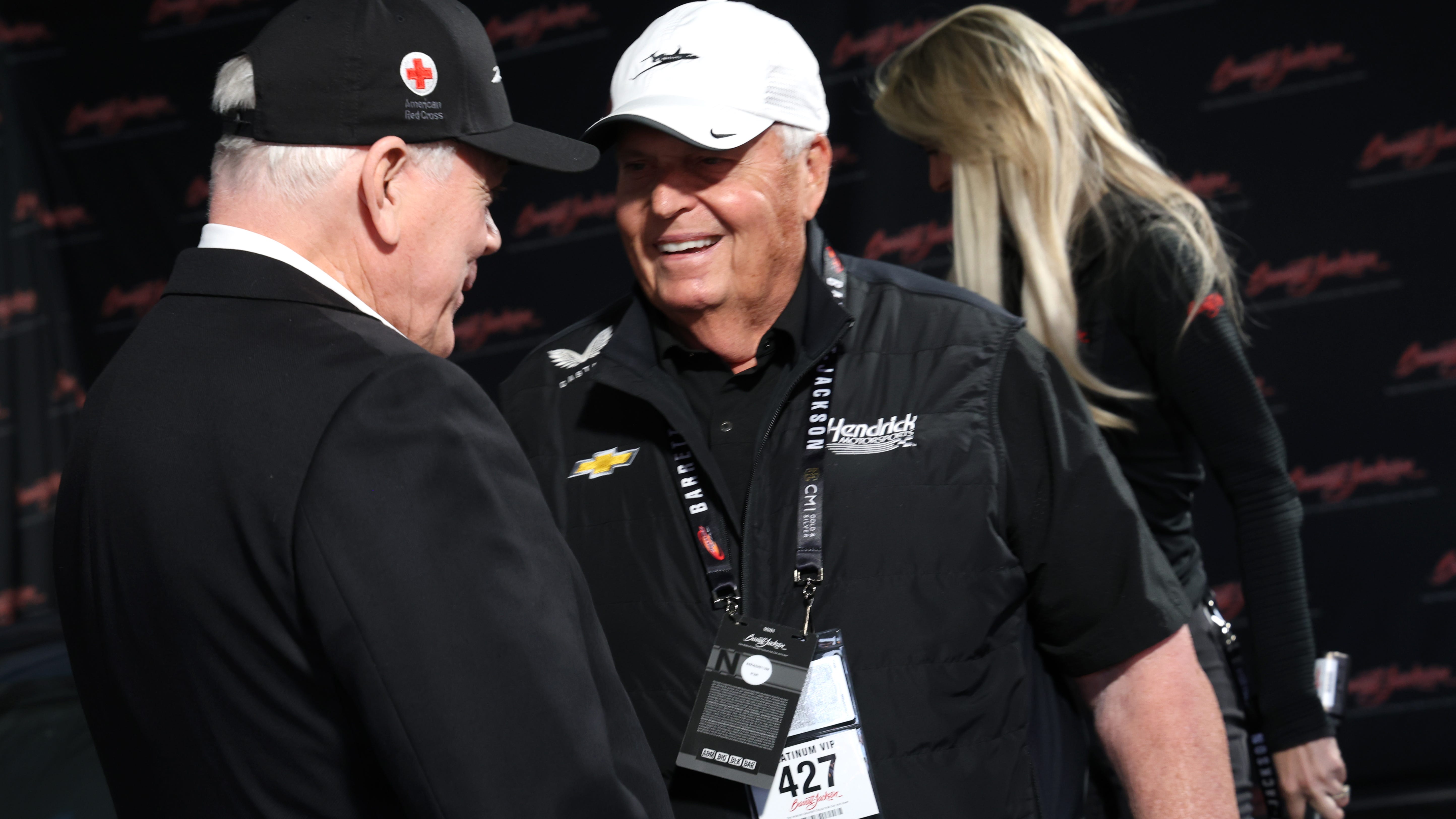

GM dealer Rick Hendrick wins auction with $3.7M bid for VIN 001 Corvette ZR1
GM dealer Rick Hendrick won a live auction with a record-tying $3.7-million bid for VIN 001 Corvette ZR1.
- Zora Arkus-Duntov, the “Godfather of the Corvette,” championed the car’s V-8 engine and performance legacy.
- His personal 1974 Corvette Stingray, restored by the National Corvette Museum, will be on public display.
- The restored Corvette features unique customizations, reflecting Arkus-Duntov’s personal touch and passion for the car.
Zora Arkus-Duntov was known as the “Godfather of the Corvette” for having championed production of the car in the 1950s and getting General Motors to put a V-8 engine in it to make it a true performance car.
Yet Arkus-Duntov owned just one Corvette in his lifetime: A 1974 Corvette Stingray. Now the public can see that car restored to its full glory when the car makes its public debut during the National Corvette Museum’s 31st Anniversary Celebration on August 28–30, 2025.
The car has been undergoing a meticulous and pricey restoration for the past two years in preparation for the reveal and permanent display in the newly opened Hall of Fame Exhibit at the museum. The museum is located across the street from GM’s Bowling Green Assembly plant in Kentucky — the factory where GM builds Corvettes.
Museum staff say Arkus-Duntov’s car has been a main attraction to draw in Corvette enthusiasts since the museum first acquired it in 1995.
“For the museum and the Corvette community this car is priceless. It’s one of a kind. It’s like finding the number one 1953 Corvette,” said Dan Garrett, vehicle collections supervisor at the National Corvette Museum. “For Corvette lovers, they come to see this car because they remember Zora and his wife Elfi in that car.”
Arkus-Duntov comes to America
Arkus-Duntov, born in 1909 to wealthy Russian parents in Brussels, Belgium, spent more than two decades at GM as an engineer, according to a 2014 biography on him in Car and Driver. In the 1930s he studied mechanical engineering at the University of Charlottenburg in Berlin. But during this time, he saw troubling conditions in Germany escalate, especially for Jews. So Arkus-Duntov and his wife, the former Elfi Wolff, fled for Paris and then on to America.
He had joined GM in 1953 as a development engineer and Arkus-Duntov quickly fell in love with Harley Earl’s Corvette prototype at the 1953 New York Motorama.
“(Arkus-Duntov) unleashed the full brunt of his persuasive powers to convince Chevrolet boss Ed Cole and GM R&D director Maurice Olley that a production Corvette would be a ‘turning point’ for GM and that his contributions could be instrumental in advancing any high-performance automobile’s cause,” Car and Driver wrote.
Making the Corvette a world-class car
There was just one problem: The 1953 Corvette had the “Blue Flame Six” engine in it, said Ryan Eichler, chief marketing officer of the Corvette Museum. The Blue Flame Six was a six-cylinder engine that produced 150 horsepower, according to MotorTrend. Arkus-Duntov knew the Corvette needed something more powerful.
“We consider him to be the Godfather of the Corvette because when you think of the Corvette’s DNA, it’s about performance, innovation and design,” Eichler said. “The first Corvette had the design, but he convinced GM to make it a performance car. He convinced GM to put the first V8 engine in it in 1955.”
Arkus-Duntov believed to make the Corvette a true performance car, GM had to put a V8 in it and “it’ll open up the market and set the tone for Corvette success in the remaining 70 plus years,” Eichler said.
His contribution went beyond that, however. When Corvette sales were faltering in 1957 and GM considered killing the car, Arkus-Duntov again stepped up. He recast it as Chevrolet’s halo vehicle. A halo vehicle is a stylish, high-end car that is meant to shine a light on a brand’s technology and design prowess. Its purpose is to attract new car buyers to a brand, not to be a high-volume seller itself.
Arkus-Duntov’s Corvette strategy earned him internal respect and “the job of evolving the Corvette from a fashionable, gutless two-seater into a world-class sports car,” Car and Driver wrote.
The one and only
Despite his obvious passion for the Corvette, Arkus-Duntov only owned one before he died on April 21, 1996 in Michigan.
“If you picture yourself as a senior GM engineer in the 1960s and 1970s, you didn’t need to buy a car,” Eichler said. “He would take prototypes and drive them as his daily driver.”
But in 1974, a year before he was set to retire, Arkus-Duntov decided to give himself a retirement gift. It was the last year of the Big-Block V8 engine for cars and he wanted to get one given that he’d worked hard to push for that engine to be in the Corvette, Garrett said.
So Arkus-Duntov bought a 1974 Corvette Stringray from a dealership in Michigan where he lived at the time. Garrett did not know the name of the dealership that sold the car to Arkus-Duntov or how much he paid for it. Garrett said Corvettes sold for about $5,000 in 1974 — about $35,000 today when adjusted for inflation.
Arkus-Duntov’s Corvette would have been made in GM’s factory in St. Louis, Missouri, Garrett said. The first 1953 models were hand-built in Flint, Michigan. Only about 300 were made that year.
In 1954, GM moved Corvette production to St. Louis where it remained until 1981. Then GM moved production to the current location of Bowling Green Assembly plant in Kentucky.
Eichler said Arkus-Duntov bought the car in silver, but a year later, he had it repainted to Corvette’s “bright green” color.
“Zora, and a lot of designers, are never happy with what they have and want to customize it,” Eichler said. “So he had it painted green and then, he entrusted a friend to repaint it a two-tone color scheme that you see on it now.”
Eichler said the museum does not have documentation as to when that paint job occurred, but the two-tone colors that exist on the car now are light blue, called Spectramaster Medium Blue, and a dark blue. The museum does not have the specific name for the darker blue, Eichler said.
“Zora loved the paint job on the car so much, he had his wife paint his picture standing next to the car,” Garrett said. The portrait is in the National Corvette Museum.
Meticulously restoring a classic
Arkus-Duntov owned the car until the mid-1980s and then sold it to a couple. They owned it until 1995, when they donated it to the museum, Garrett said. The museum has never had Arkus-Duntov’s car appraised, so Garrett doesn’t know how much it is worth. But 1974 Corvettes are not that popular and don’t bring a lot of money, he said.
“A nice one sells for about $15,000,” Garrett said. “I would say his would be worth quite a bit more though just because of the history.”
Arkus-Duntov’s Corvette was on display at the National Corvette Museum from 1995 until 2023, when the museum realized it needed come off display.
“We were redesigning the area and that’s when we discovered how much damage the car had to it with sitting there and how much rust was on it,” Garrett said. “This was Zora’s daily driver and he drove it no matter what, in rain, snow … so the fuel lines were rotted away, the gasoline line was rotted…so that was when we started talking about doing a preservation of the car.”
Eichler added that Arkus-Duntov’s car had 100,831 miles on it when it was donated. It still has 100,831 miles on it because once a car is donated to the museum, it becomes an artifact, and is not driven.
For nearly two years, the museum’s team meticulously repaired the vehicle. Garrett said they removed the body from the frame and stripped the frame down to the bare metal to fix the rust. They restored the full suspension, front and rear. They put in a new brake system, a new fuel system and rebuilt the engine and power steering system.
“The body and the interior were pretty nice and had a lot of Zora’s history in it so we left that alone,” Garrett said.
The parts to do the entire project cost about $20,000, but that figure does not include the 964 man-hours spent on the work. Garrett and Eichler said it was worth it.
“You can look at the car and realize just how special it was by the look of it,” Eichler said. “It has special touches like the two-tone blue, it has the intials ZAD hand painted on each of the doors. He took the time to customize it and make it his own.”
Besides being able to see Arkus-Duntov’s Corvette, visitors will also see the museum staff working on its next project: preserving a 1971 LT1 Corvette, Garrett said.
The museum, which has 115,000 square-feet of Corvettes and Corvette artifacts, is open seven days a week from 9 AM to 5 PM and general admission is $25.
(This story has been updated to correct a typo in a photo caption.)
Jamie L. LaReau is the senior autos writer who covers Ford Motor Co. for the Detroit Free Press. Contact Jamie at [email protected]. Follow her on Twitter @jlareauan. To sign up for our autos newsletter. Become a subscriber.
link