Honda bring out a new Sports-tourer around Hornet platform
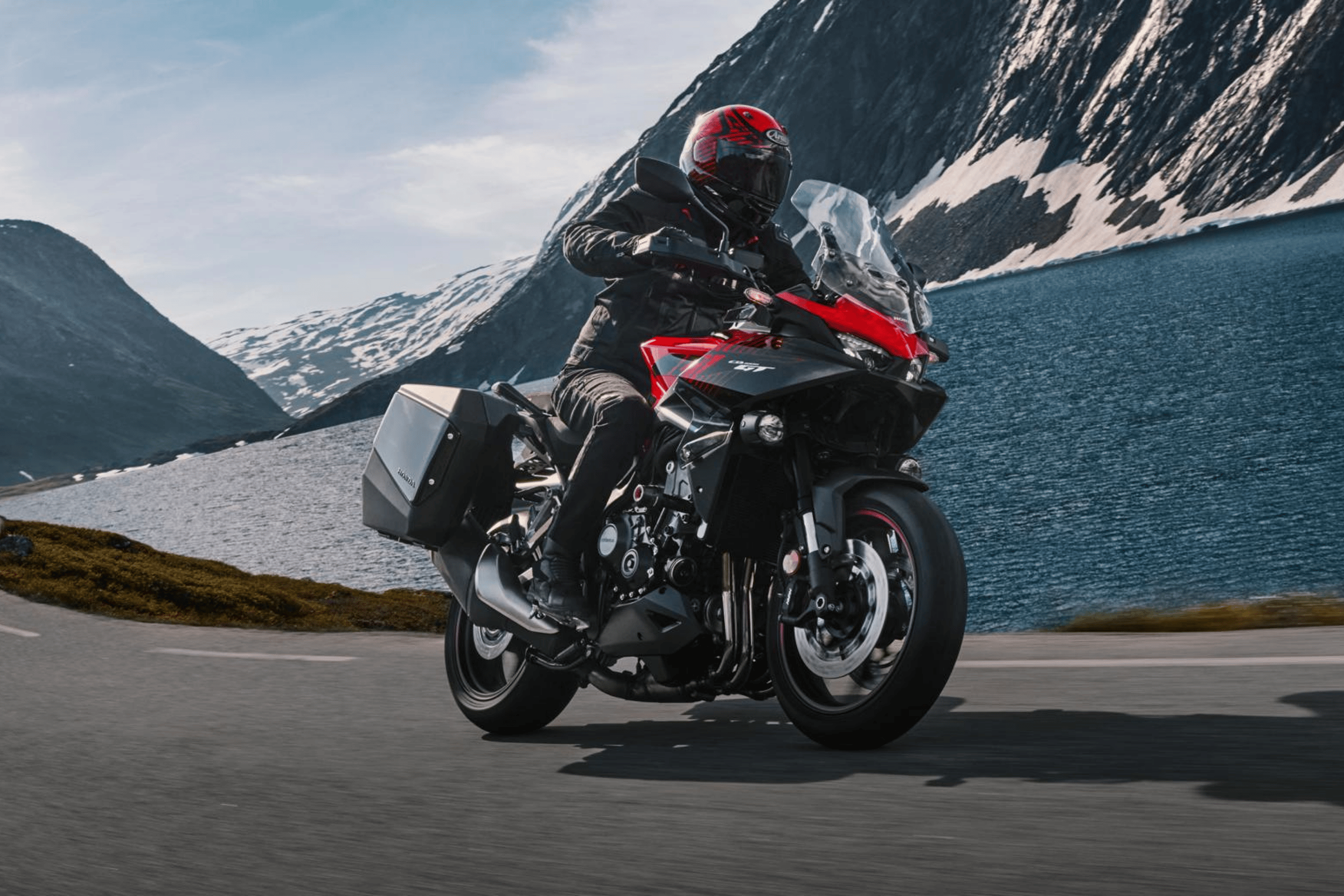
Honda are making maximum use of their highly popular four-cylinder CB1000 Hornet platform, launching a new CB1000GT sports-tourer variant for 2026 featuring a six-axis Inertial Measurement Unit (IMU), ride-by-wire throttle, and electronic suspension.
It joins the aforementioned Hornet and Hornet SP, plus a 70s-inspired retro CB1000F muscle bike for 2026 – all sharing the same 2017 CBR1000RR Fireblade superbike-derived 1000cc DOHC inline-four cylinder engine.
Power for the GT comes in at a respectable 147.6bhp at 11,000rpm – making it a natural rival to other 17in front-wheeled sports tourers such as the 150bhp Suzuki GSX-S1000GX, 133.1bhp Kawasaki Versys 1100, and 149bhp Harley-Davidson Pan America 1250 ST.
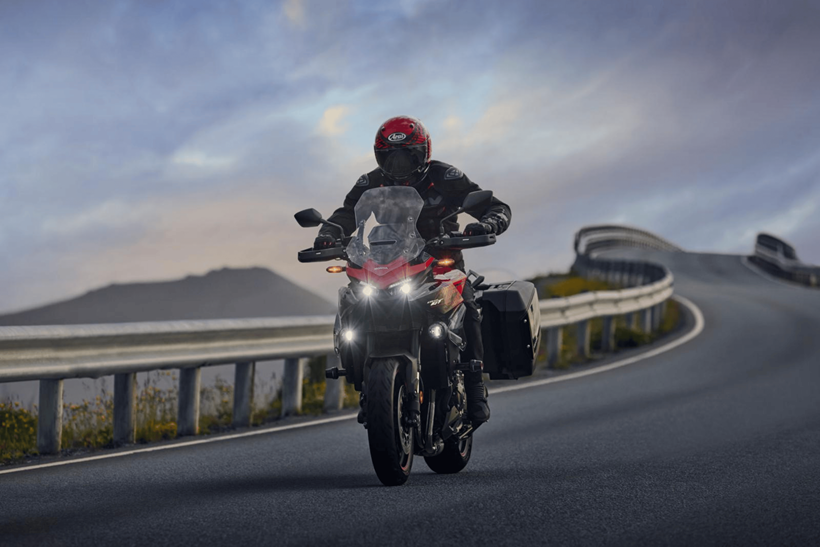
Potential customers might also consider Honda’s own twin-cylinder NT1100 family, which makes 100bhp (but more torque) from its Africa Twin-derived engine, as well as BMW’s more powerful long-legged S1000XR that now chucks out just shy of 168bhp.
It also produces a claimed 75.3lb.ft of torque at 8750rpm, with the four-cylinder engine fed via a 21-litre fuel tank and paired with a six-speed gearbox. Ratios in second to fifth have been developed for acceleration, with sixth then used as an overdrive for more relaxed motorway work.
An assist/slipper clutch helps with aggressive down shifting, and Honda reckon you’ll be able to go 211 miles on a tank, thanks to a claimed efficiency of 44.6mpg.
Kerb weight now sits at a claimed 229kg (18kg more than the standard Hornet), with the rider’s seat height coming in at 825mm, thanks to a new perch that’s 15mm thicker than on the Hornet, plus a whole 39.5mm chunkier for a pillion.
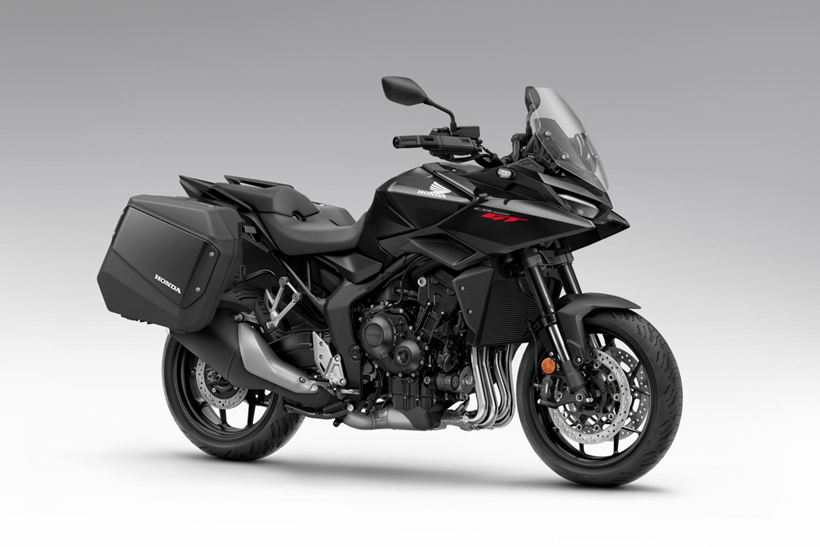
Base spec is mightily impressive too, with rear panniers (37l left and 28l right), cruise control, heated grips, hand guards, a centre strand, and quickshifter coming as standard. A full suite of lean-sensitive electronic aids are controlled via a 5in glare-resistant TFT dash, with backlit controls on the left-hand switch cube and mobile connectivity.
Chassis-wise, the motor is held via a one-piece diamond-style steel design adapted from the Hornet that’s claimed to be narrow between the rider’s legs. Helping to make things nicer for a passenger and luggage is an extended subframe, with the swingarm also extended from 619mm to 635mm in pursuit of stability.
Speaking of which, the new bodywork is also said to have been designed with weather protection and aerodynamics in mind, with a five-stage adjustable front screen offering an 81mm range of movement, depending on your riding scenario.
Further altering to meet the riding conditions are the Showa-EERA electronic suspension components (also available on the CRF1100L Africa Twin) which adjust damping levels based on speed data from the ECU, bike stance and angle from the IMU, and fork behaviour – taken from the front stroke sensor.
Changes are made every 15 milliseconds, with rear travel increasing over the Hornet by 4mm to 144mm. Front movement remains unchanged at 130mm, with four pre-defined suspension settings available, plus a ‘User’ setting that allows for a more personalised set-up.
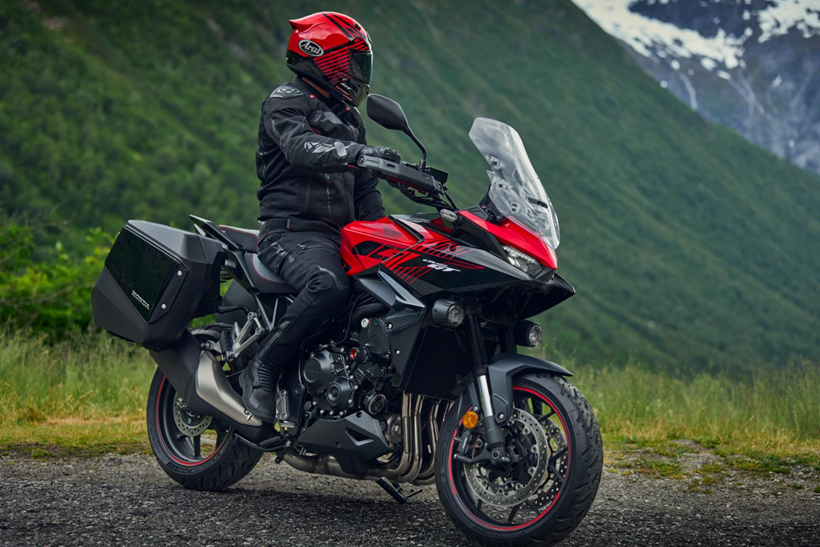
Despite the electronic damping, front preload adjustment remains manual. That said, riders can cycle through 24 stages of rear adjustment on the move – handy if you’ve underestimated the weight of all your touring kit strapped to the back end.
Stopping power comes via twin radially-mounted four-piston Nissin front calipers and 310mm floating discs, complete with cornering ABS. Being a road-biased tourer, rim size is a conventional 120/70×17 and 180/55×17 – finished in a five-spoke design originally conceived for the CBR1000RR-R Fireblade concept.
Finally, controlling the performance of the engine is a comprehensive suite of electronic aids, including three levels of power, engine braking, and rear traction control. It’s made possible by the inclusion IMU and ride-by-wire throttle, with riders also able to switch off the traction control (otherwise known as Honda Selectable Torque Control) entirely should they wish.
Much like the suspension settings, there are four pre-set riding modes to choose from, consisting of ‘Standard’, ‘Sport’, ‘Rain’, and ‘Tour’. A customisable ‘User’ setting also lets you configure your perfect parameters in each of the performance settings.
link