
Metis Engineering & Lightfighter Racing: Cell Guard technology
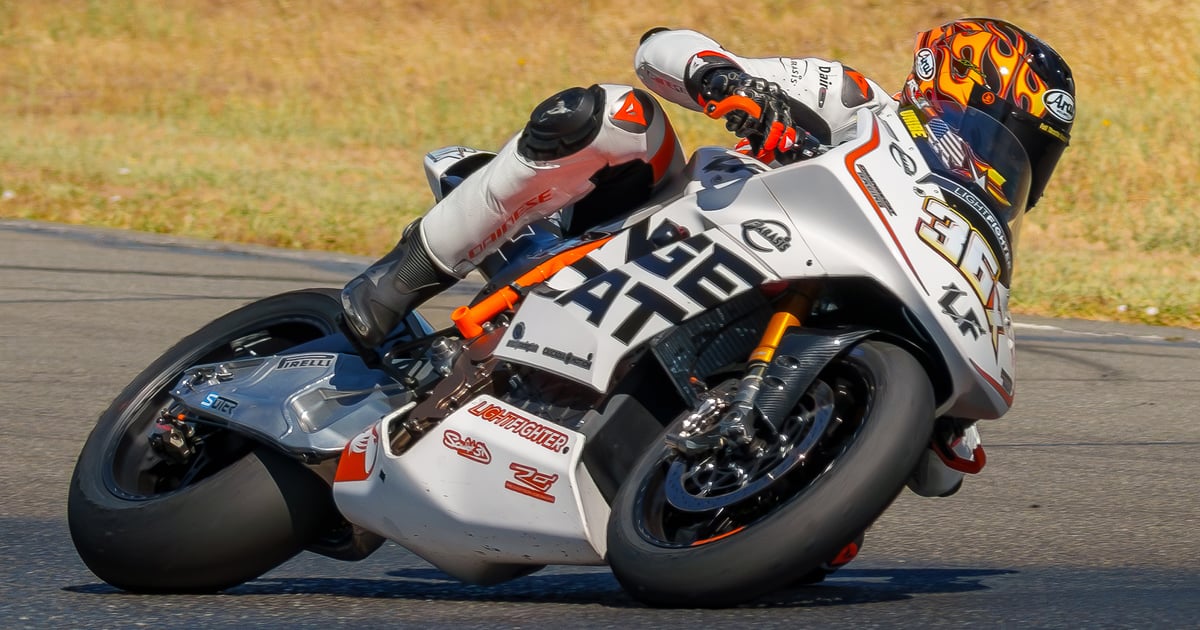
UK-based Metis Engineering has joined forces with California’s Lightfighter Racing, working to improve the safety and performance of battery electric superbikes.
The partnership integrates Metis Engineering’s Cell Guard battery safety sensor into Lightfighter Racing’s Lightfighter v3.0 electric motorcycle, which hopes to rival traditional ICE-powered competitors in the American Federation of Motorcyclists (AFM) championship.
Lightfighter Racing says it aims to challenge the dominance of internal combustion engines in motorsport. The Lightfighter v3.0 is powered by a high-performance lithium nickel manganese cobalt (lithium-NMC) battery pack driving a water-cooled motor. Lightwater claims the bike delivers exceptional speed and agility while maintaining critical safety oversight. Crucially, recognising the thermal and safety challenges of high-performance battery systems is a key element of pushing the technology to its limit, which is why Lightfighter partnered with Metis Engineering to take advantage of its Cell Guard sensor technology to enable real-time monitoring and fault detection.
Cell Guard is a multi-parameter sensor that detects early indicators of battery failure, such as volatile organic compounds (VOCs), temperature spikes, and pressure increases. This technology provides an additional layer of safety, crucial when batteries are being pushed to the limits of their specifications.
Early battery distress detection
Metis’s Cell Guard has delivered unexpected benefits beyond safety. During race testing, the sensor detected VOC spikes caused by exhaust gases from petrol-powered bikes being drawn into the battery cooling system. This is impressive as an illustration of the system’s sensitivity, but it also shows the technology’s potential for detecting other external factors that might encumber battery performance.
Brian Wismann, co-founder and CEO of Lightfighter Racing, emphasised the importance of early detection: “Conventional battery monitoring systems often react too late in motorsport environments. Cell Guard’s ability to detect the earliest signs of cell distress has become a valuable addition to our safety strategy.”
Electric motorcycle racing has arguably been quicker to catch on than the transition from ICE to electric on the road, largely due to the fact that electric motorcycles are still prohibitively expensive compared to their ICE cousins While we’ve seen that trend before in four-wheeled vehicles, motorcycles are a more specialist form of transport—and their riders often more traditionalist in their approach—so we can likely expect the transition to take longer. As is often the case, however, motorsport technology filters down to road-going vehicles. With EV motorcycle technology still in its relative infancy and road users eyeing two-wheeled battery vehicles with some suspicion, it’s likely that failsafe tech like this will become an important battleground as the industry looks to move ICE riders onto electric bikes in the coming years.
We can, of course, expect more populous areas of the world, such as India, to show us the way for congestion-mitigating EV bikes. Indian motorcycle manufacturer Ultraviolette recently secured US$21m in its latest funding round to boost motorcycle electrification across India.
link