Do you get your driver’s licence if your car parallel parks for you?
Learn to parallel park, even if your car can do it for you
Article content
A New Jersey teen used his father’s Tesla to take his road test, and flunked. Why did this recently make the news? Because the examiner noted the following:
“Had the parking and stopping assistance on never stepped on the brake to stop his self [sic] let the vehicle stop itself.”
Article content
Article content
According to James Keefer, the tester declared that Keefer’s son had allowed the car to perform maneuvers rather than doing them himself. Keefer said his son was accused of using parking assist because he parallel parked perfectly on the first execution. But Dad also says that’s a subscription service that he doesn’t have. The electric car does have a regenerative braking system, which significantly slows the car when you remove your foot from the throttle. The article goes on to say that Motor Vehicle Commissions — the ones who do the testing — are adjusting to the new tech, though, as always, some frontrunners have been caught in the wheels of bureaucratic molasses.
Advertisement 2
Article content
While there is plenty of room for two sides as to what went wrong, the central issue here is important. As the vehicles we drive become increasingly more complex and capable of outperforming drivers in some instances, how do we test for practical knowledge, and where do we draw the line? Many features of ADAS (advanced driver-assisted systems) are for safety. With lane departure warnings and blindspot warnings and cameras and sensors embedded all over most modern cars, do drivers really need to be tested for such antiquated things as shoulder-checking?
Yes. Over and over, yes. Until a vehicle is totally autonomous, until the small print no longer says that a driver has to have full control over that vehicle at all times, and until drivers are well and truly only passengers, yes. You don’t need a licence to be a passenger. As a driver, you need to be able to properly and safely operate any vehicle you are driving. Testing for every concept and skill, no matter if technology currently exists that makes it seemingly redundant, is the only fair way to licence drivers.

How are new drivers being tested?
Article content
During the pandemic, Ontario streamlined its testing system to clear out a backlog. Instead of two thorough road tests, only the first one includes things like parallel parking. The final test to a full G licence in Ontario became getting on a highway, then getting off two exits later. A reader was stunned when her son took this last exam, and called me. I went with the kid while he recreated the test. Ontario has still not returned to properly testing drivers for the final road test.

Wonder what your car is worth?
Get your instant cash offer in under 2 minutes.
Advertisement 3
Article content
Eighteen months ago, “Ontario’s acting auditor general says the province’s removal of three-point turns, parallel parking and other requirements from G class driving tests was done without a full review and may have impacted road safety,” according to the CBC. If you think Ontario drivers are worse than ever before, I will join you on that bench, though drivers of all ages and temperaments bear some blame.
Read More
-

Survey: Canada’s the fifth-easiest country in the world to get a driver’s licence
-

Young people are interested in learning to drive manual: survey
-

IIHS: Little evidence partial automation prevents crashes
A friend called me recently, angry that his niece had flunked her first road test. The straight-A student met up with a driving examiner who proceeded to fail the youth on several “ridiculous” things. It’s a tale as old as time; driving examiners wrecking the future plans a kid has for the coming months. A job to start, maybe commuting for school, it’s always something urgent, and some crochety old (or not so old) teen-hater is throwing a spanner into the works. I put ridiculous in quotations because the problems were not, in my opinion, ridiculous. Picky? Yes. But when we’re sending newbies out onto our desperately overcrowded roads surrounded by increasingly distracted drivers, is there really such a thing as being too hard on them? And this was the young woman’s first road test, which in Ontario, means pretty much the only one.
Advertisement 4
Article content
Safety features can camouflage poor driving habits
The advanced features on new cars can lead to seasoned drivers becoming lazy, and new ones who never learn the basics to begin with. Legislating things like backup cameras and ABS and traction control is good; drivers who have no idea when their car has just saved their butt is not. Your front collision avoidance system can be brilliant when the car ahead of you suddenly stops, but it doesn’t differentiate between that and you texting while you nearly rear-end someone. It’s great that technology doesn’t judge, but the rest of us should. Future testing might have to start with assessing a driver’s understanding and usage of such driver assists.
When I came of driving age in the dark ages, not all cars had power steering and power brakes. If either of those fail, you can still control the car if you’re not freaking out. I’ve driven on icy highways and had cameras and sensors cut out on many makes of vehicles. If you’re relying on a camera that can no longer see and warning systems that go dodgy, you better have the skill set to kick it old school. Your computer bluescreening is one thing; your vehicle failing in a similar way at 100 km/h is another. Vehicles have never been safer, and the proof is in how many people walk away from crashes that once would have been fatal.
“Driving is cognitively demanding. A single trip engages attention, decision-making, and emotional regulation in ways that few daily activities can. Studies show that stress can double reaction times, turning a split-second into a near-miss or much worse,” reports Psychology Today. Driving is a big deal.
Advertisement 5
Article content

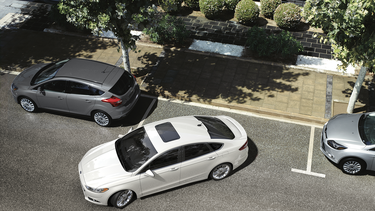
Parallel parking is a skill that needs to be learned, regardless of modern technology
Technology is always miles ahead of the legislation that is supposed to regulate it, and something as important as driver training needs to keep up. Adapting to things like regenerative braking and backup cameras has to be incorporated into our testing, but something like the dreaded parallel parking is a skill to be learned and not left to a vehicle; some manufacturers are moving away from it. It’s physics, it’s art, and you never know when you might need it.
Final thoughts
I don’t know if our New Jersey Tesla was the problem. The father’s official filed complaint contained the following tidbit: “Further exacerbating this misconduct, I clearly heard an MVC employee identify me pejoratively as a `Republican’ and perceived that I was being discriminated against due to driving a Tesla — a brand publicly associated with Elon Musk, who has been subject to politically motivated controversy.” It’s a good story to lead off a discussion about ADAS and driver testing, even as politics reminds us why we can’t have nice things.
At the other end of the spectrum, many of these features can keep older drivers driving longer and more safely. As physical limitations set in, blind spot and lane departure warnings, along with backup cameras, are a godsend for those with compromised mobility. The discussion surrounding how examiners retest this cohort is also going to have to evolve. Loss of mental acuity is a dealbreaker, but if someone can’t move their neck as freely as they once could, is their licence pulled if the vehicle can adequately prevent a collision? These are questions we’re going to have to contemplate moving forward.
New drivers taking a road test can be anxious, and test examiners can make errors. Technological advances continue to change what we drive, but that doesn’t mean drivers should become less capable.
Sign up for our newsletter Blind-Spot Monitor and follow our social channels on X, Tiktok and LinkedIn to stay up to date on the latest automotive news, reviews, car culture, and vehicle shopping advice.

Lorraine Sommerfeld
link